Twenty documents, twenty stories
Whispers from the Archives
Every document in an archive was once a moment in someone's life: a form filled out at a counter, a letter written late at night, a stamp pressed down in a hurry by a stranger. Hardly any of the people on these pages imagined that their papers would be read a hundred years later. Yet each one holds far more than names and dates. Read slowly, a single page can tell you what someone hoped for, what they feared, and what they carried with them when they left. Here are twenty such pages, each from a different family, each telling its story on its own.
Click to enlarge
1916
Eighteen
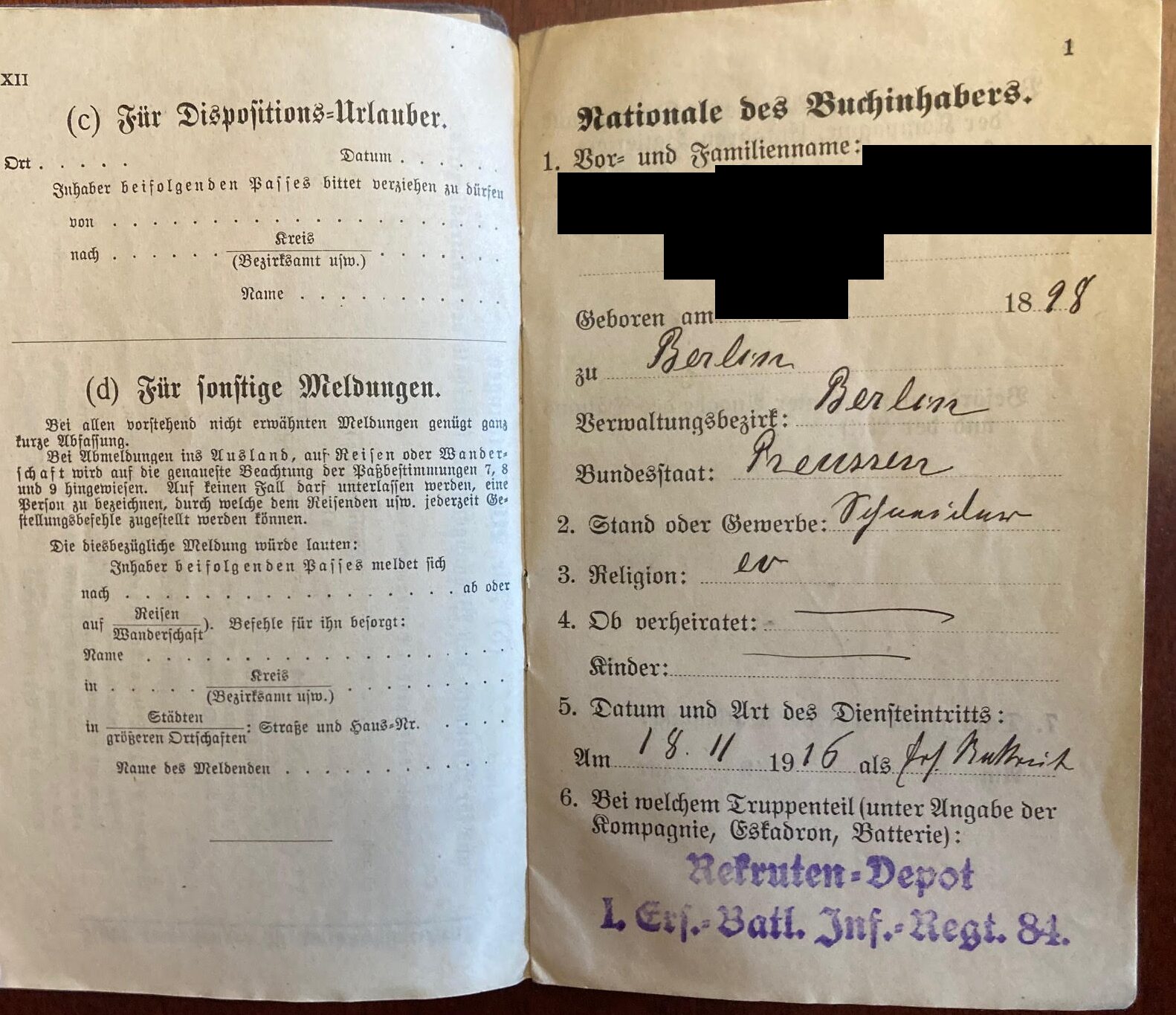
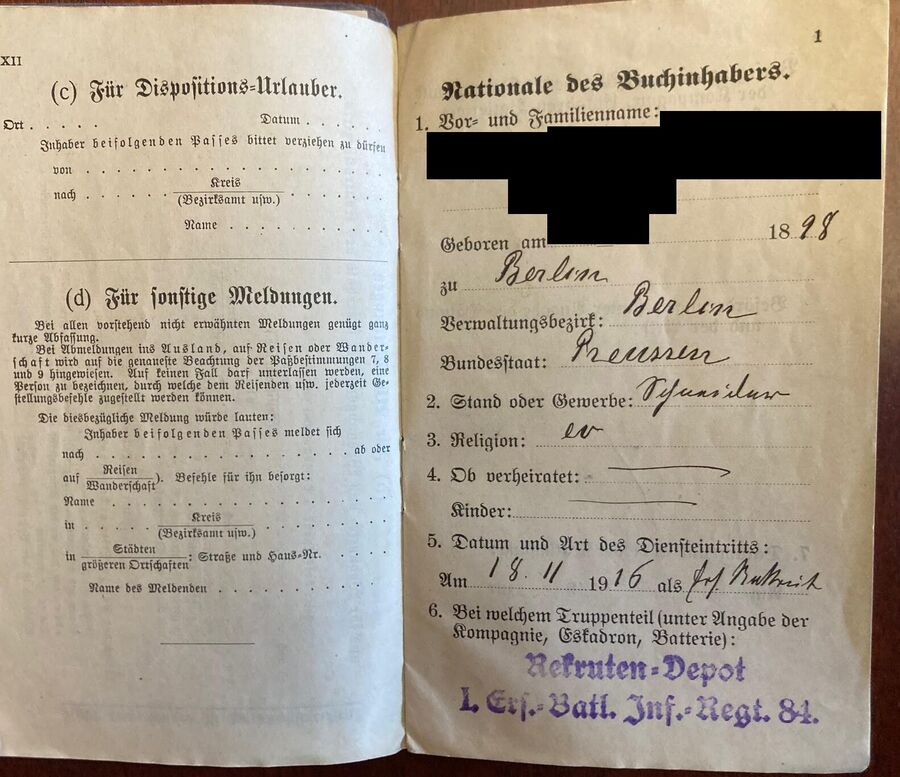
On November 18, 1916, a young man from Berlin was handed this small booklet, and with it a life he had not chosen. The clerk wrote down what there was to know: born in Berlin, Prussian, Protestant, a tailor by trade. After "married?" and "children?" he drew two long dashes. There was nothing to put there yet. There was no wife and no child, only a boy of eighteen who had learned to measure, cut and sew. Then the purple stamp of a recruit depot fixed his place in a war that was entering its third winter. Every line on this page marks an ending and a beginning at once. The page does not tell what became of the tailor's hands. But the booklet survived, so he, or someone who loved him, kept it.
Click to enlarge
1926
A Certificate of Home
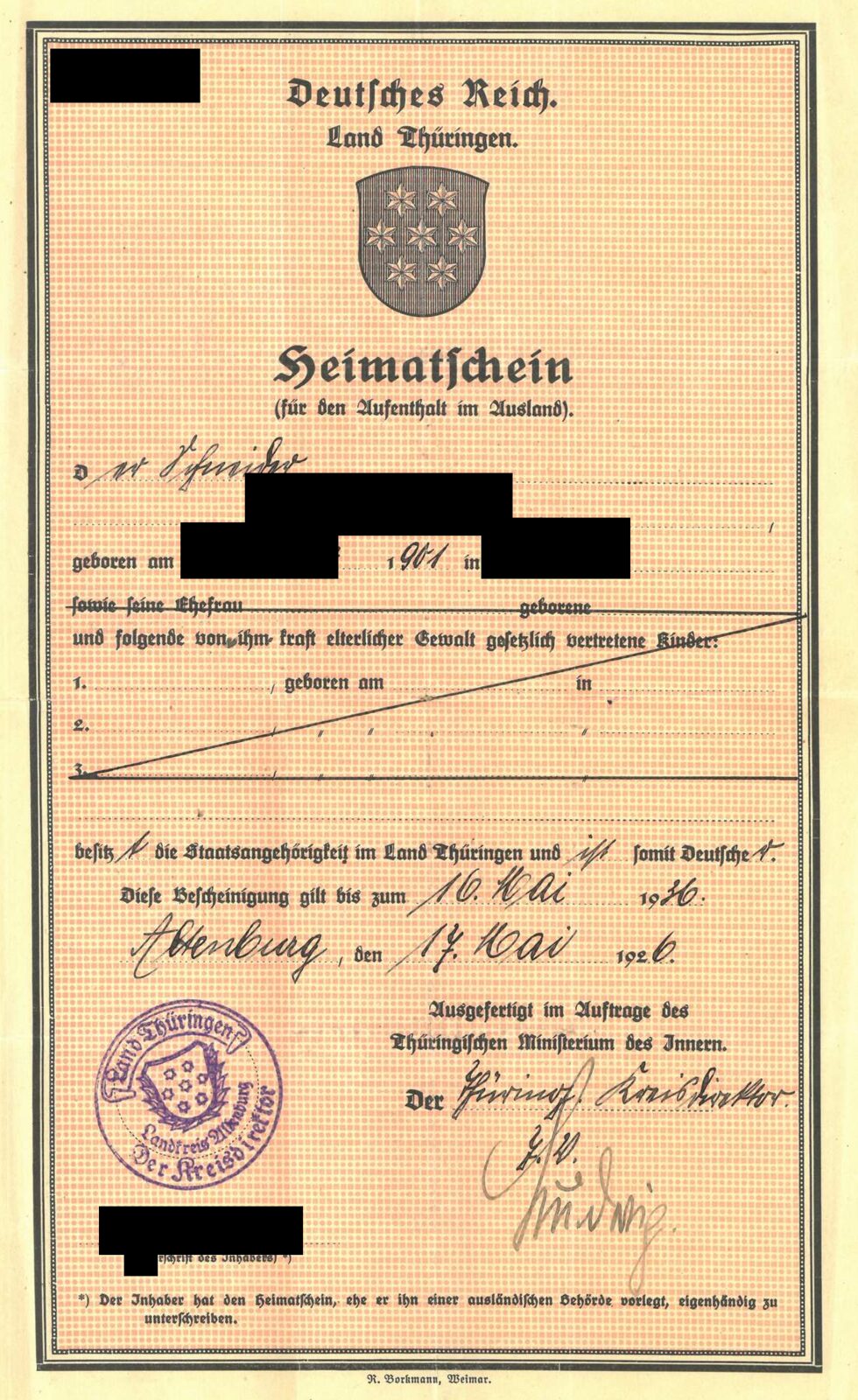
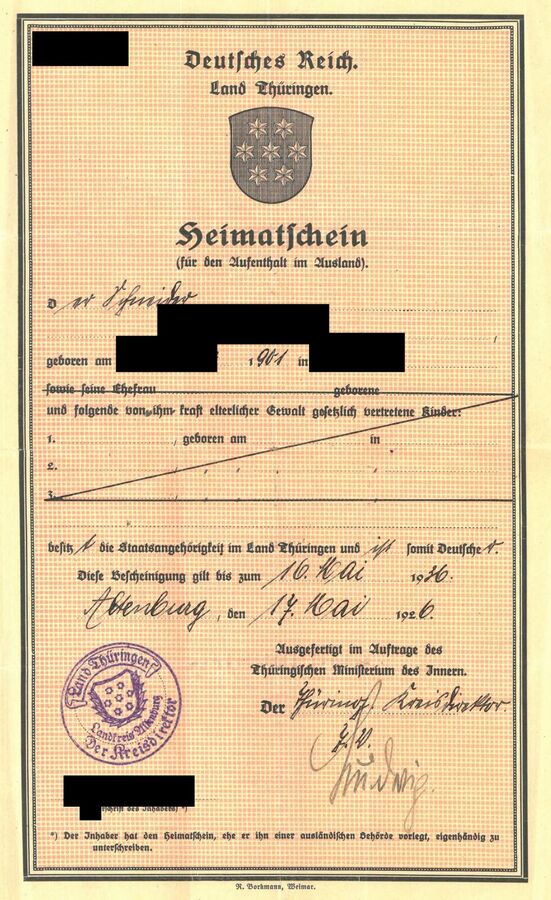
In May 1926 the district office in Altenburg issued a certificate whose title holds a beautiful old word: Heimatschein, a "certificate of home". Its purpose is printed right underneath: for residence abroad. The holder was a tailor, twenty-five years old. One long diagonal stroke of the pen crosses out the lines for a wife and for children: he was going alone. The paper was made to last ten years, until 1936, long enough for a whole new life somewhere else. At the bottom, a printed note told him to sign it in his own hand before showing it to any foreign authority, and he did. Wherever he went, this sheet went with him and quietly spoke for him: this man belongs somewhere. He is from Thuringia. He is German. Almost a hundred years later, it still says so.
Click to enlarge
1926
Three Lines in Hamburg
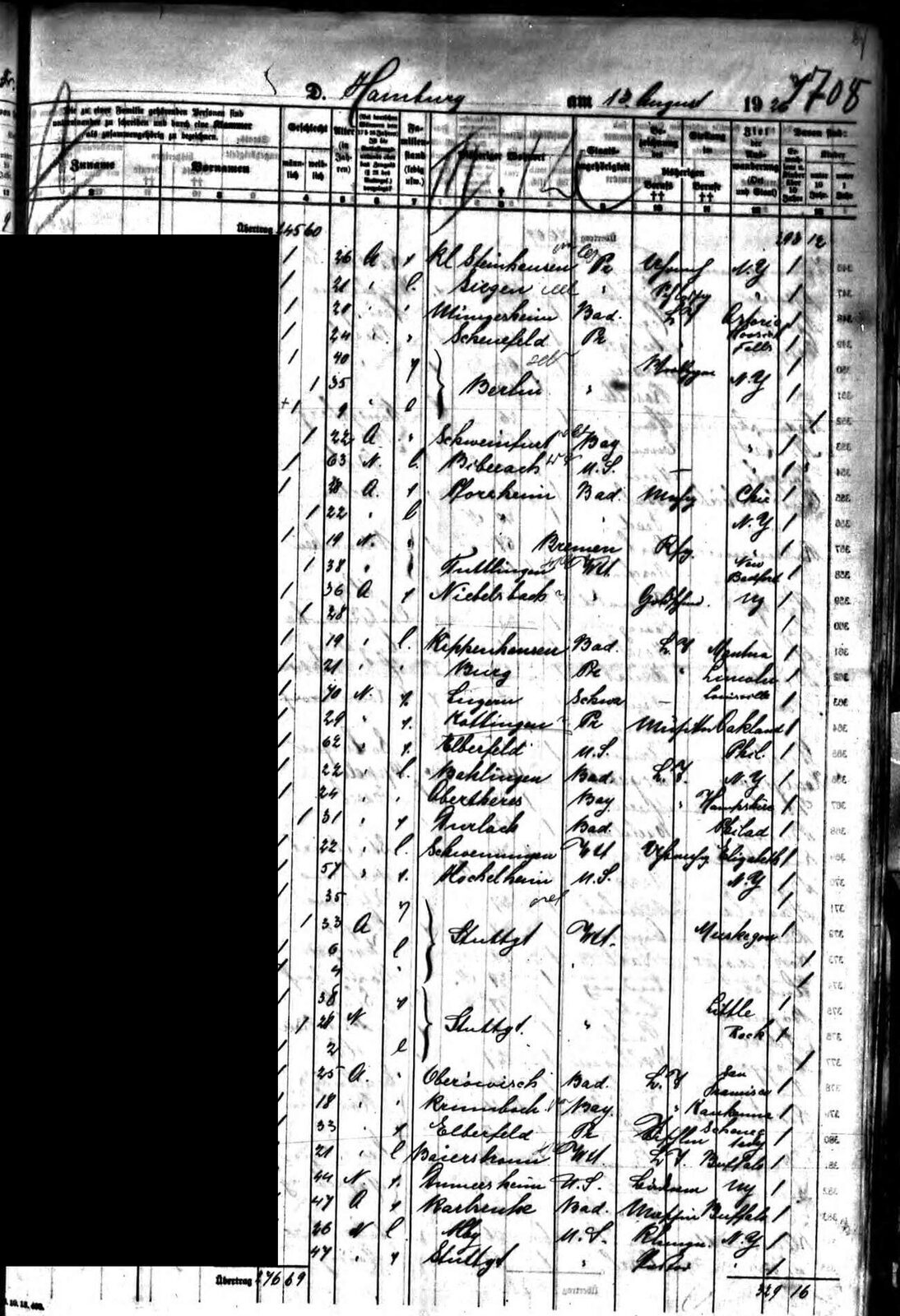
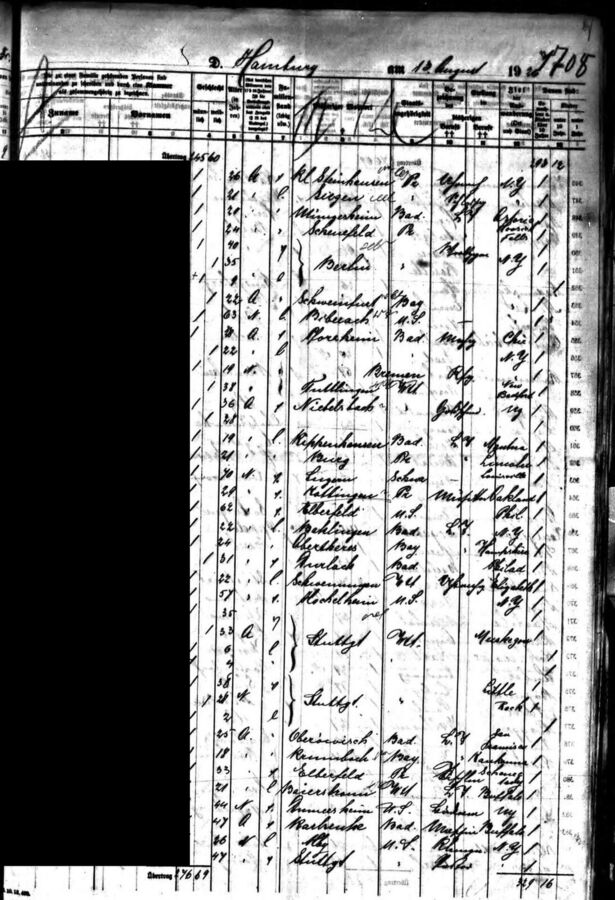
Hamburg, August 12, 1926. Page after page, a clerk at the emigration office wrote down everyone who left through the port that day: surname, first name, age, home town, state, destination. This one sheet alone holds about forty people. There are young farmhands from Baden, two families from Stuttgart with small children, and a man of sixty-two from Elberfeld. In the middle, three lines are joined by a bracket: a man of forty, a woman of thirty-five and a boy of nine. From Berlin. Destination: New York. The register holds no feelings, only ink. But picture the boy, nine years old, standing on a quay in Hamburg with his parents and looking up at the ship. Three short lines, and a family's whole future begins.
2 pages · click to enlarge
1927
Ten Reichsmarks
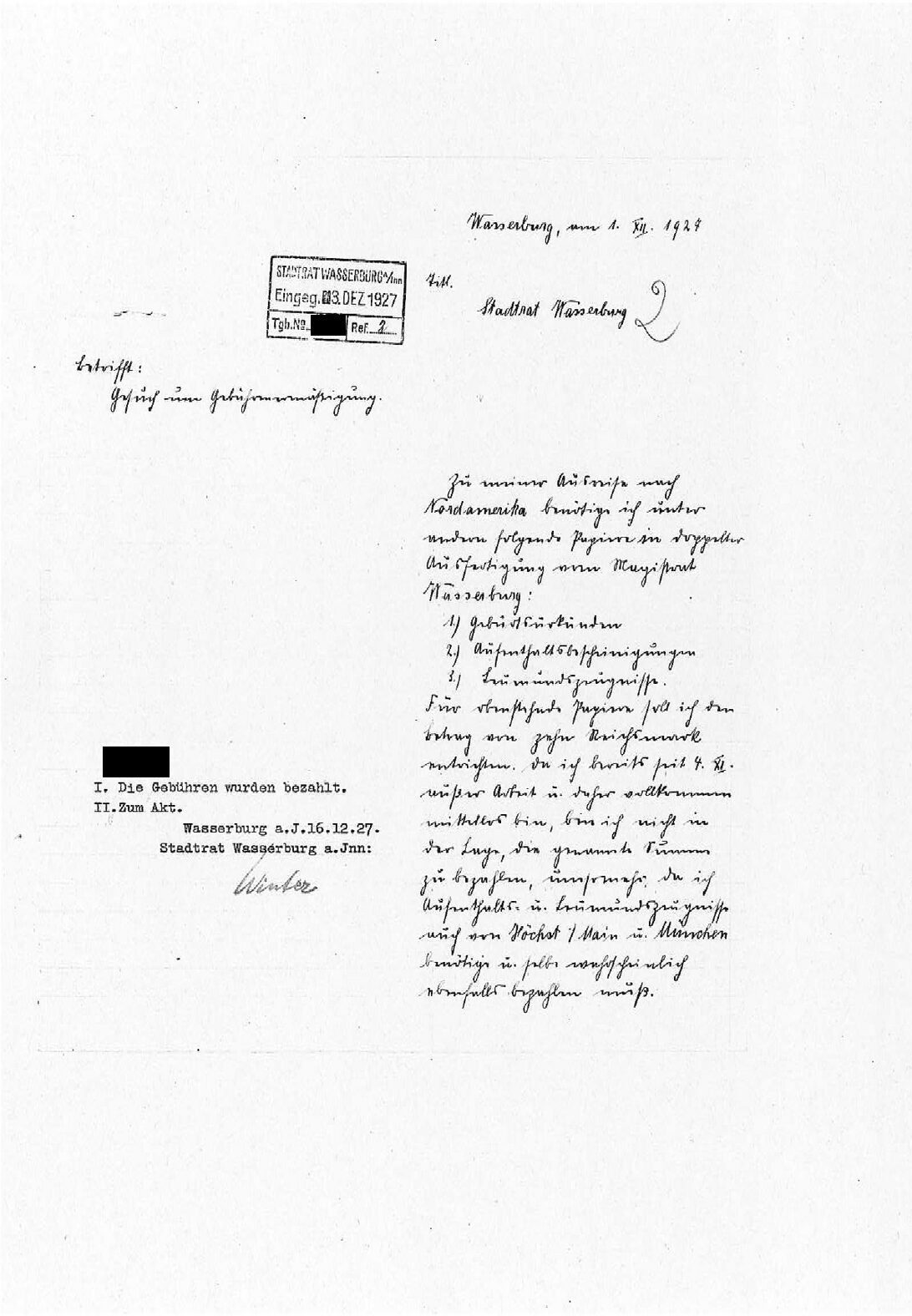
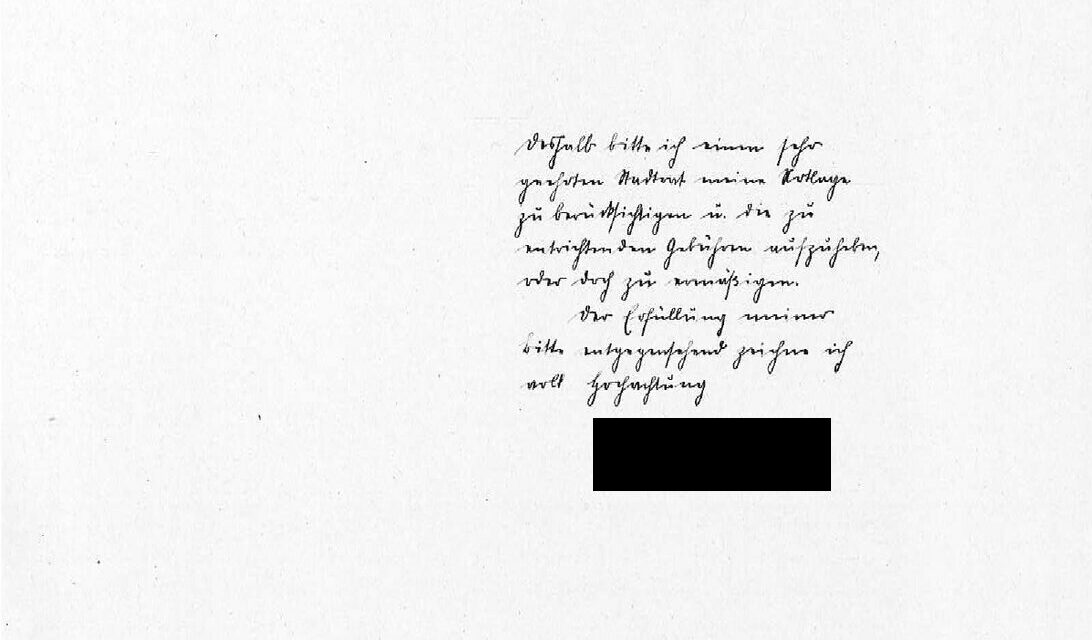
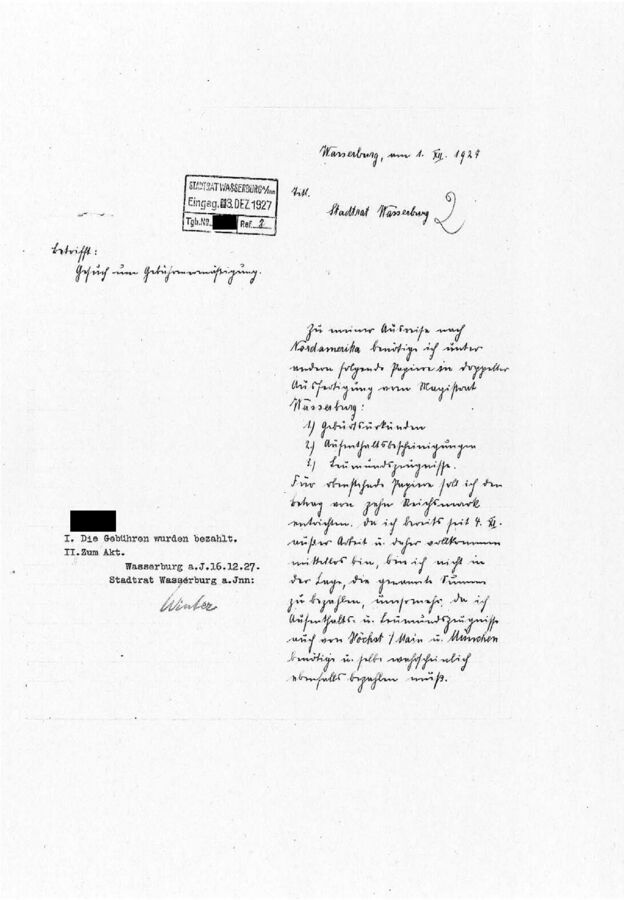
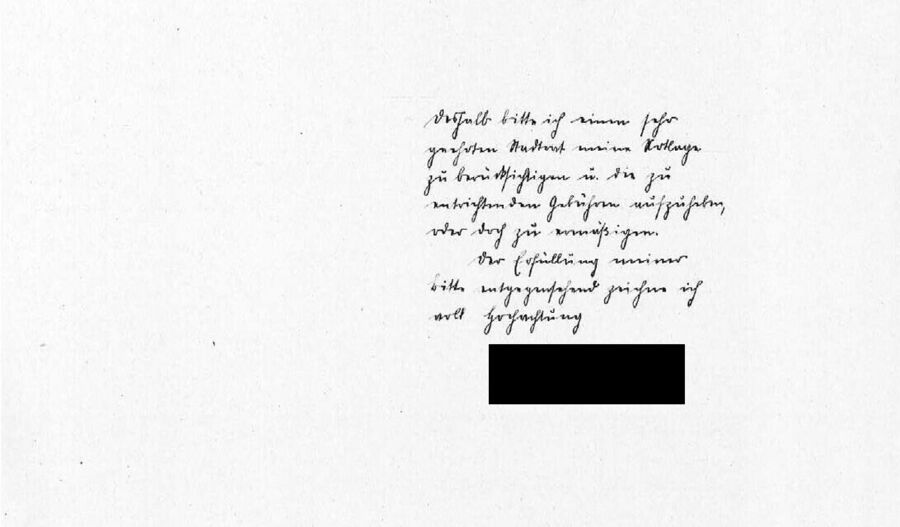
On December 1, 1927, a young man in Wasserburg am Inn sat down and wrote to his town council in careful old German script. He wanted to emigrate to North America, and for that he needed papers, each in two copies: birth certificates, residence certificates and certificates of good conduct. The town wanted ten Reichsmarks for them. He had been out of work since the beginning of November, he wrote, and he had nothing. He would also need the same certificates from Höchst am Main and from Munich, and those would probably cost money too. "I therefore ask you most respectfully to consider my situation." Two weeks later a clerk typed a short note in the margin of his letter: "The fees have been paid." Nobody wrote down how he found the money. But he found it.
1927
Three Visas, One Day
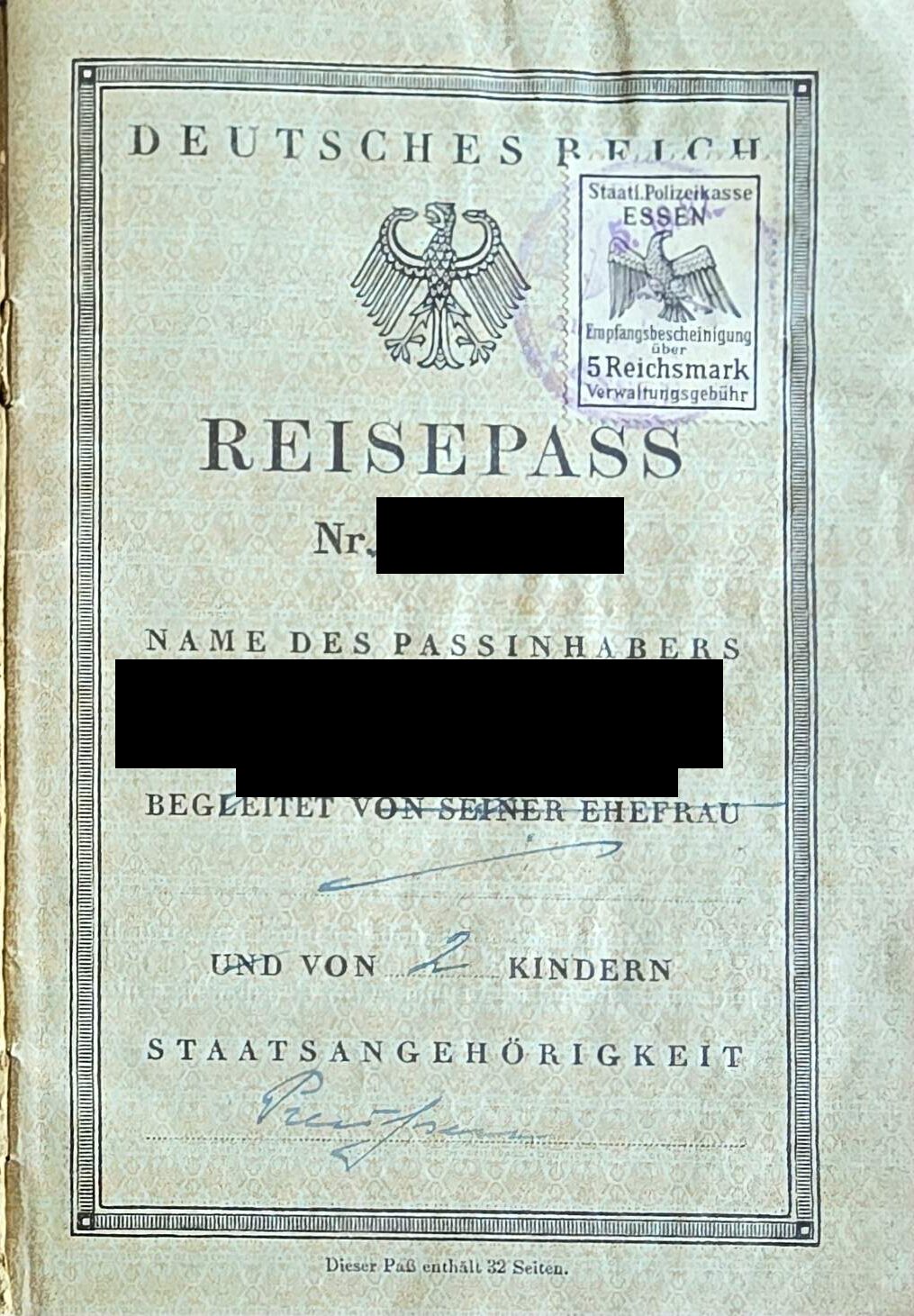
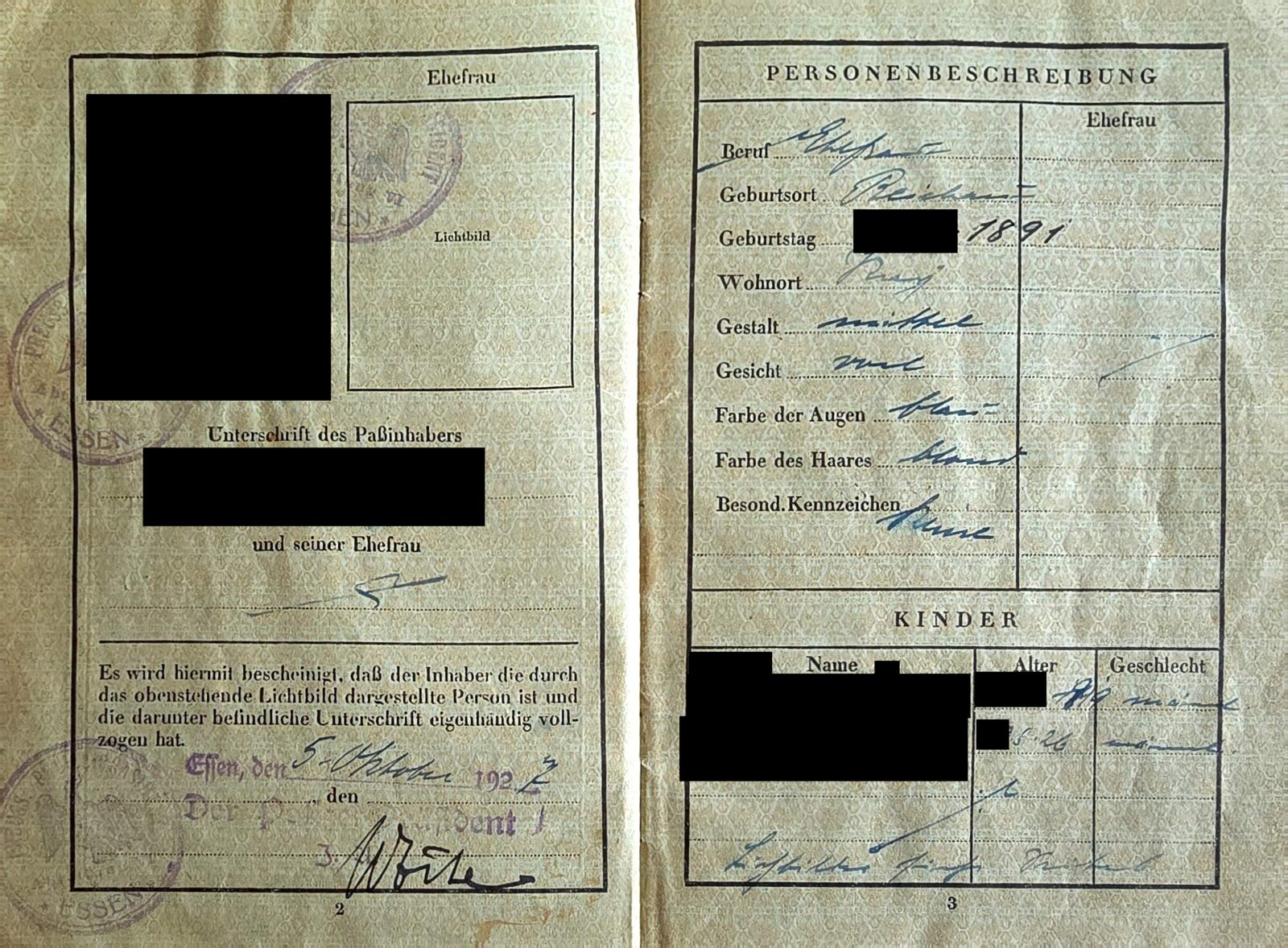
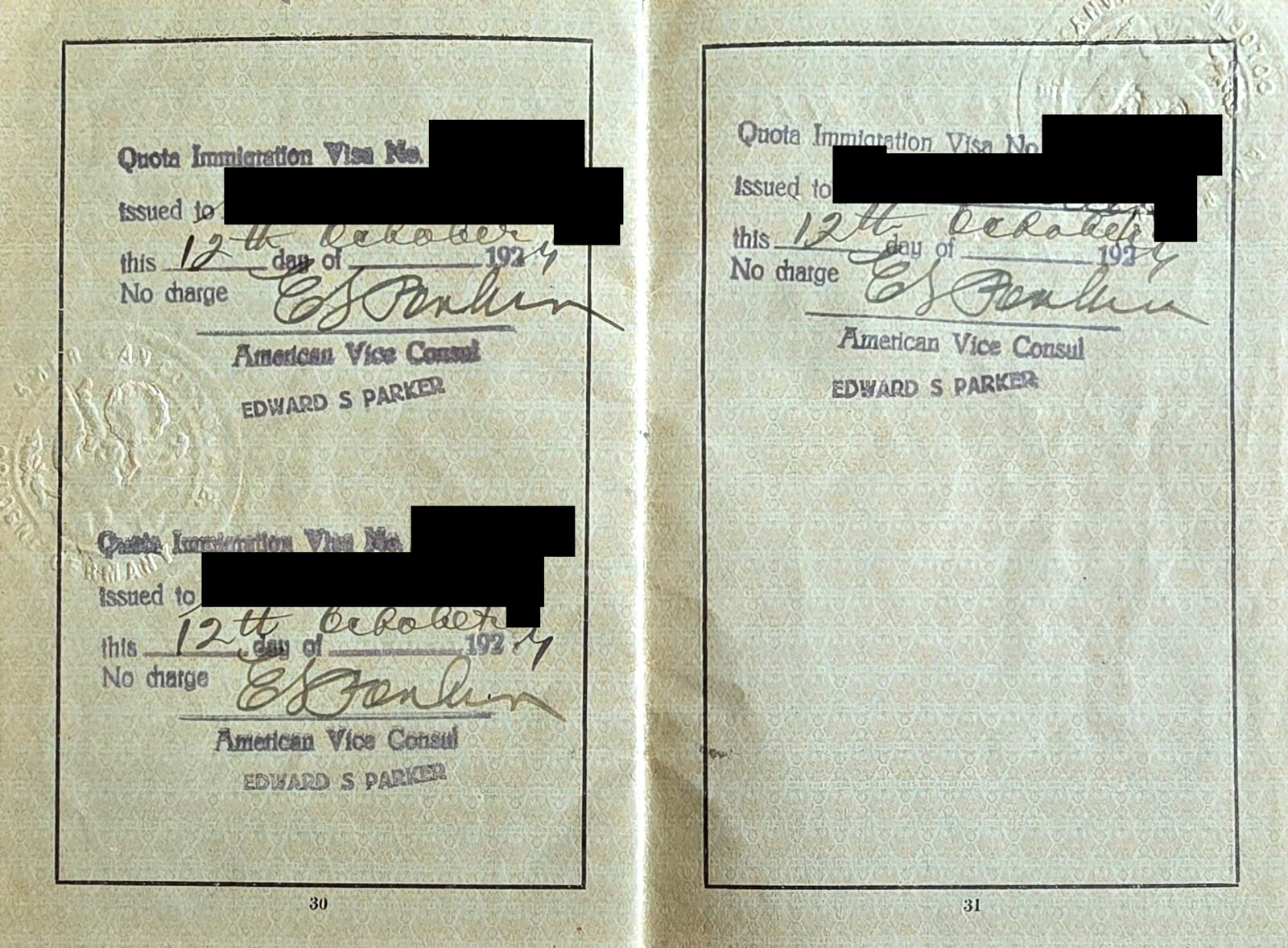
This passport was issued in Essen in 1927 to a mother. On the page for children it names two boys: one born in 1919, the other in May 1926, not yet a year and a half old when the journey came. Near the back of the passport, on pages 30 and 31, the American vice consul stamped three immigration visas, all on October 12, 1927: one for the mother and one for each son. Each is marked "No charge". Three visas, one day, one signature, one family. The passport does not say what waited for them across the ocean. What it does keep is the moment a mother took her two children by the hand and set out.
Click to enlarge
1937
A Clean Record at Seven
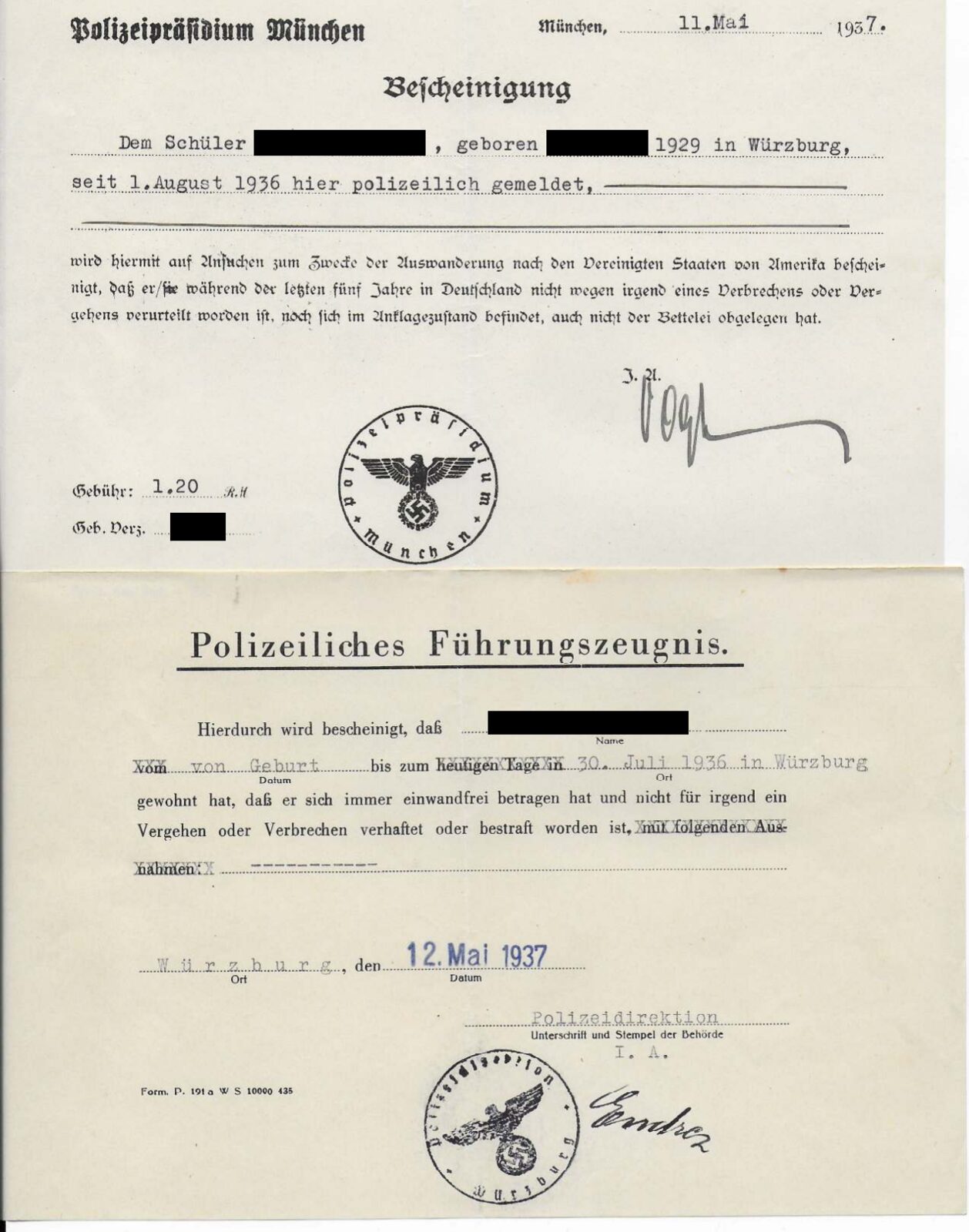
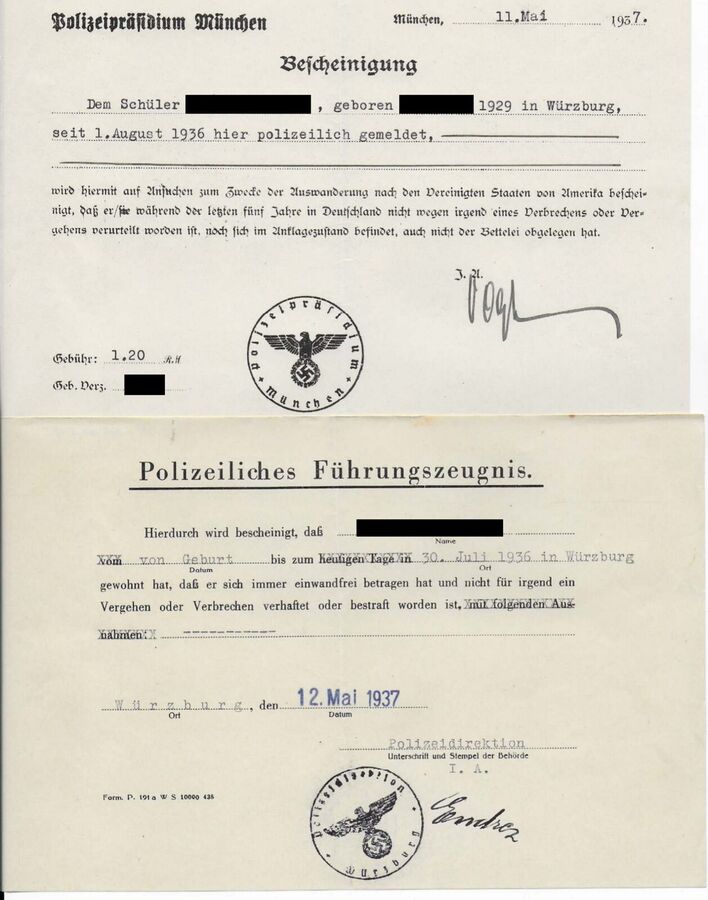
In May 1937 two police departments stamped their eagles onto papers for a schoolboy. Munich certified, "for the purpose of emigration to the United States of America", that during his last five years in Germany he had not been convicted of any crime or offence, was not under indictment and had never engaged in begging. Würzburg added that from his birth until July 1936 he had always behaved impeccably and had never been arrested or punished. The fee was 1.20 Reichsmarks. The schoolboy was seven years old, so the five spotless years began when he was two. Behind the stern official stamps you can almost see a small boy standing at the counter, holding a parent's hand, about to cross an ocean.
Click to enlarge
1939
Counted, One by One
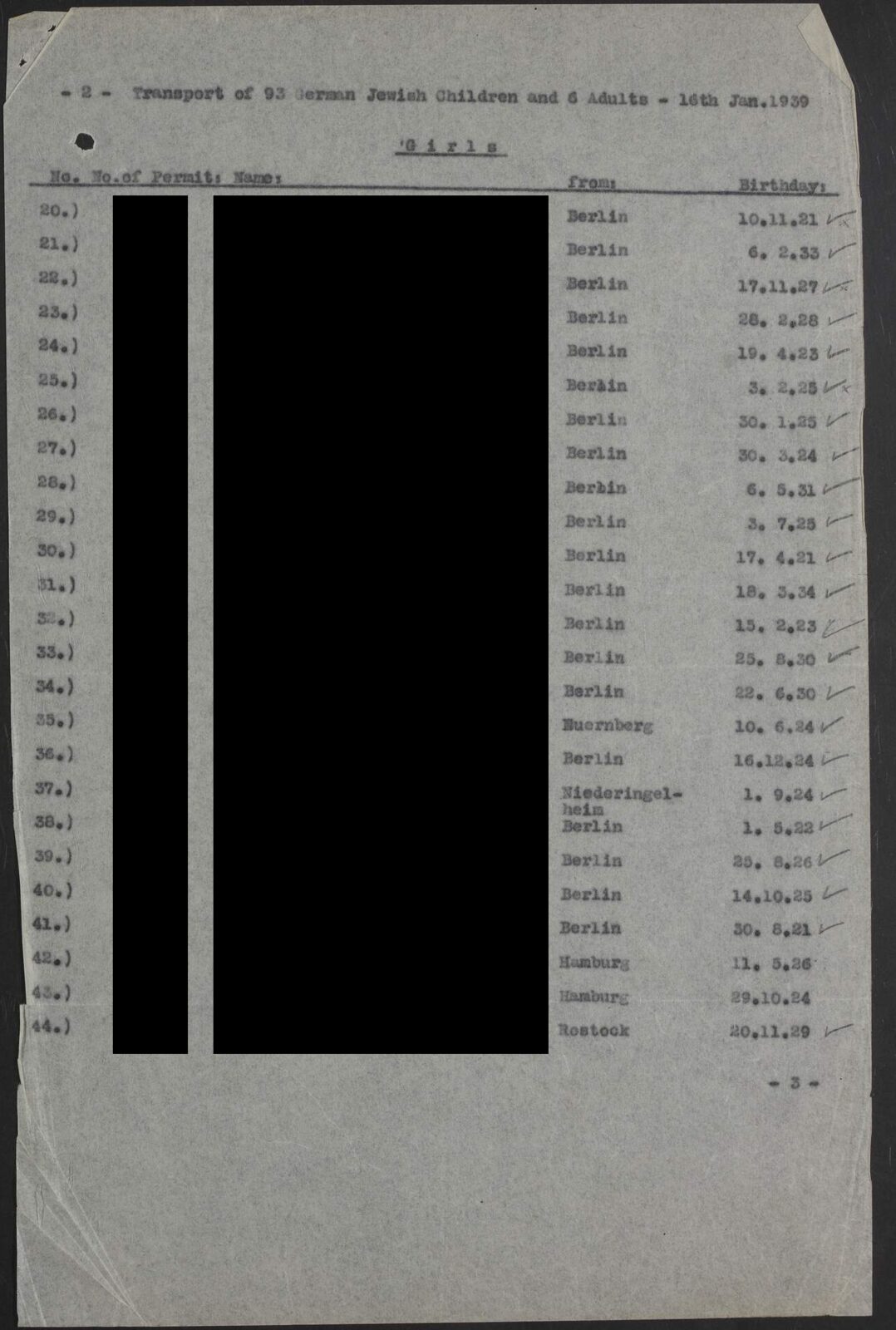
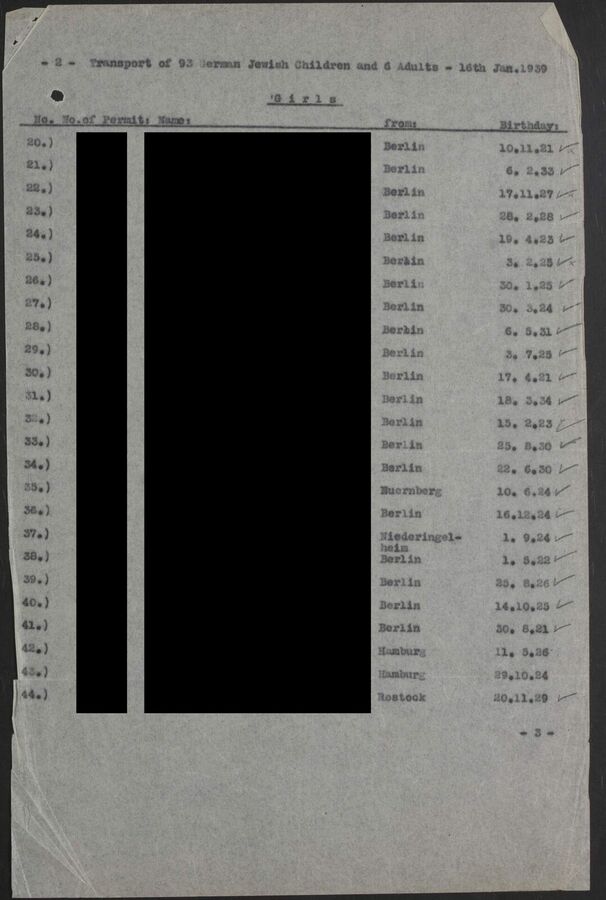
This is page two of a list typed in English: "Transport of 93 German Jewish Children and 6 Adults - 16th Jan. 1939". This page holds the girls, twenty-five of them, numbered 20 to 44, each with a permit number, a hometown and a birthday. Most came from Berlin. A few came from Hamburg, Rostock, Niederingelheim and Nuremberg. The oldest was seventeen. The youngest was born in March 1934, so she was four. Ninety-three children, and only six adults to look after them. Beside almost every line someone made a small pencil tick, going down the list child by child: checked, counted, here. One of these girls, a fourteen-year-old from Nuremberg, is the reason this page appears here. Between December 1938 and September 1939, the United Kingdom took in nearly 10,000 children, most of them Jewish, from Germany, Austria, Czechoslovakia, Poland and Danzig on the Kindertransport. Their parents had to stay behind. For many of the children, the goodbye at the railway station was the last time they saw them.
Click to enlarge
1939
A Loving Keeper of Animals
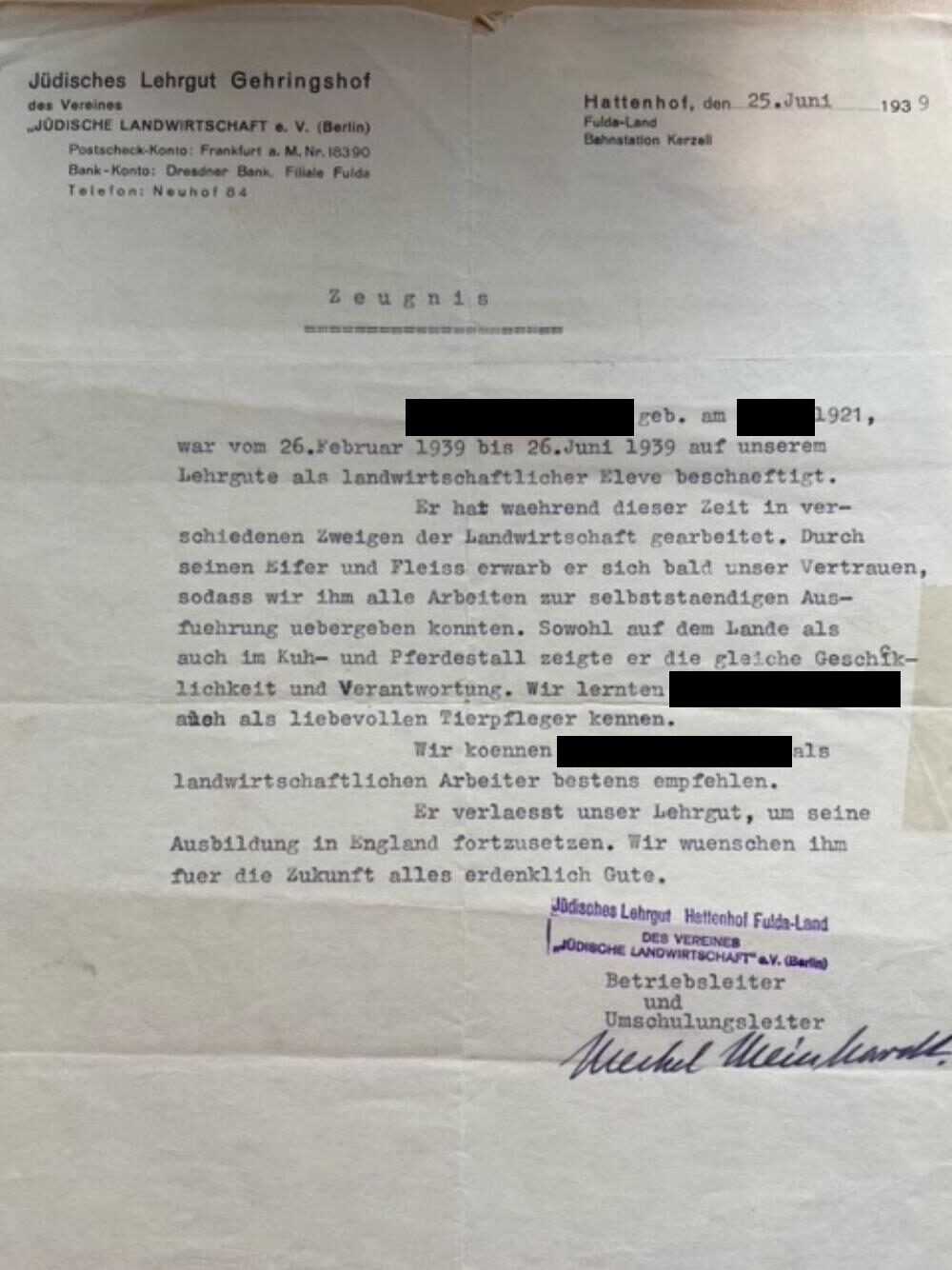
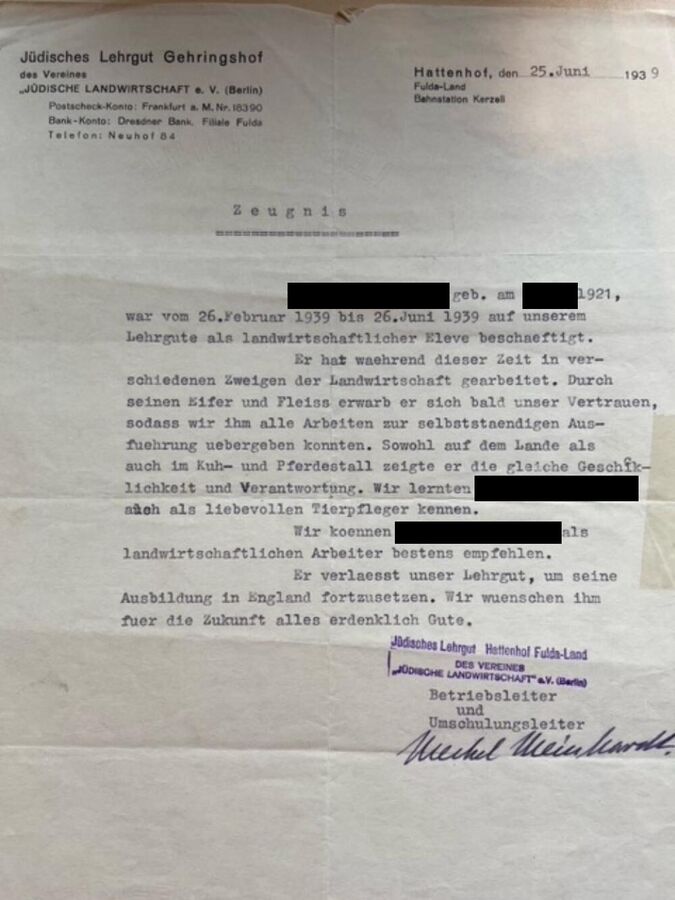
On June 25, 1939, the manager of a Jewish training farm near Fulda wrote a reference for a seventeen-year-old who had been with them since February as an agricultural pupil. It is a modest letter, typed on the farm's letterhead. He had worked in many branches of farming, it says. Through his zeal and diligence he soon earned their trust, so they could give him tasks to do on his own. In the cow barn and in the horse stable he showed skill and a sense of responsibility. "We also came to know him as a loving keeper of animals." The last lines say that he is leaving the farm to continue his training in England, and that they wish him "all the best for the future". In the summer of 1939, those plain words carried the hope of a whole life. Ten weeks later the war began.
Click to enlarge
1945
Until His Last Hour
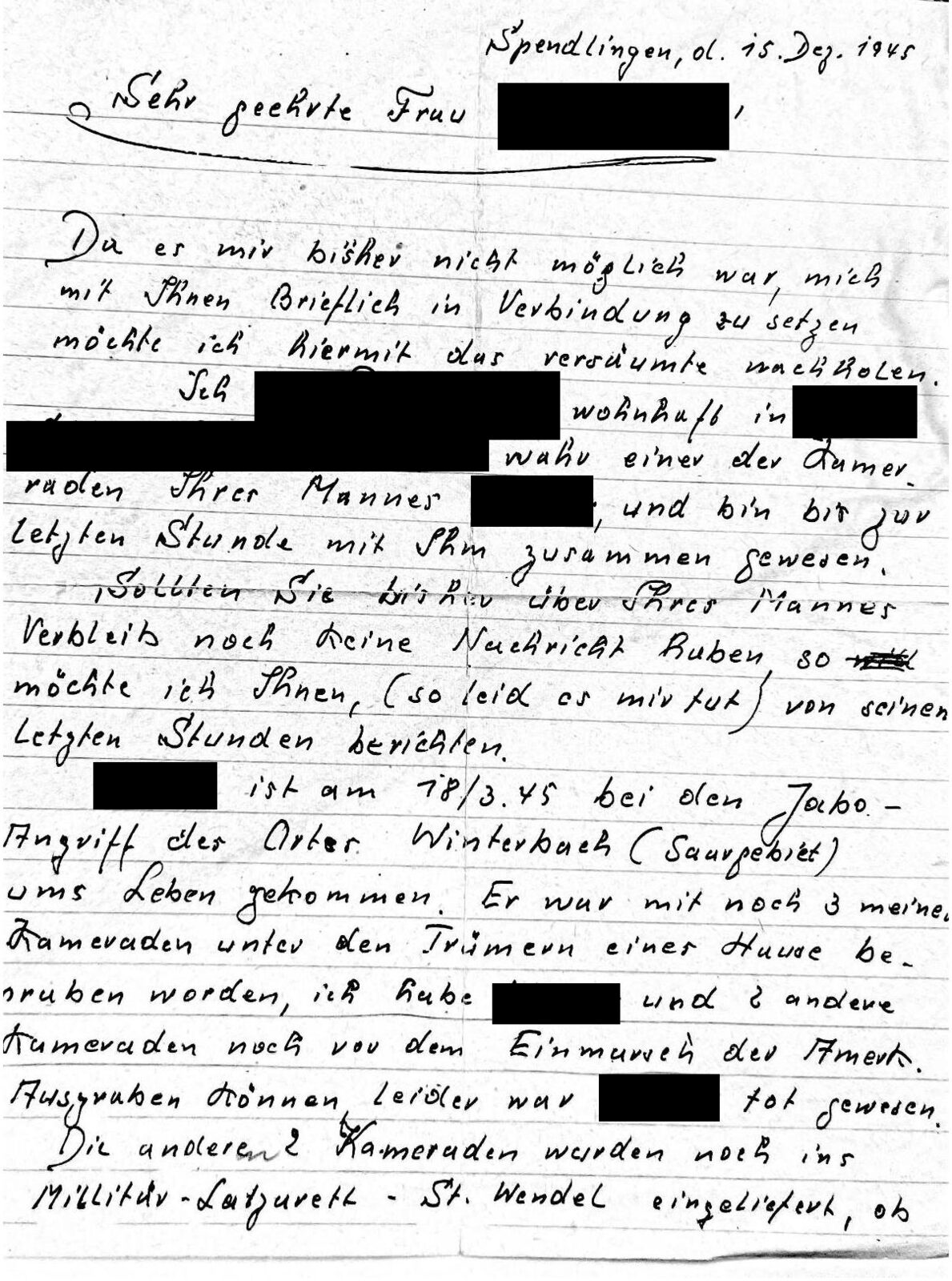
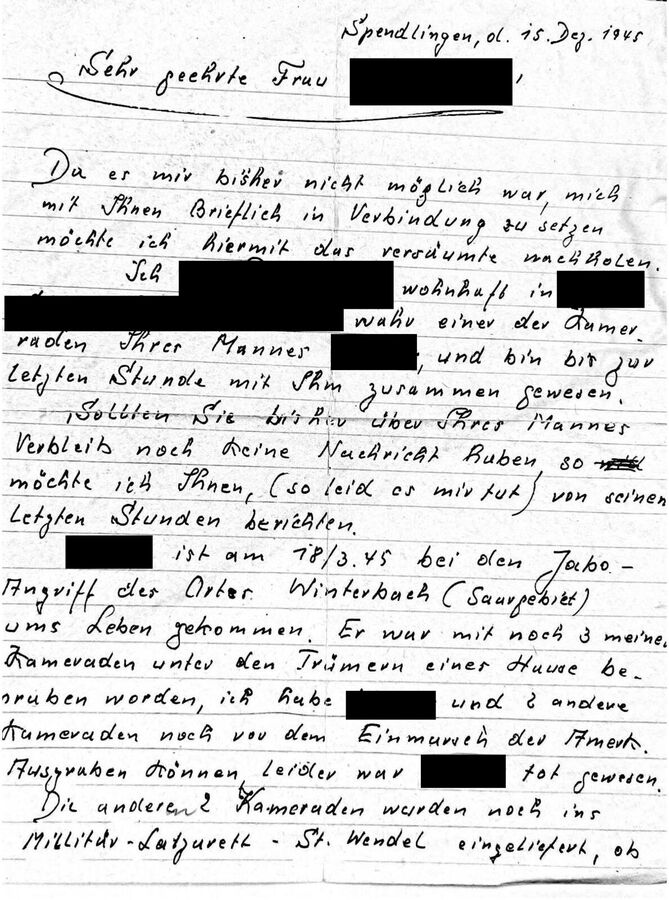
"Since it has not been possible for me until now to write to you, I would like to make up for it." So begins a letter written on December 15, 1945, nine months after the day it describes. The writer introduces himself as one of her husband's comrades, "and I was with him until his last hour". Then, gently: in case she has had no news of her husband yet, he would like, "as sorry as I am", to tell her about his last hours. On March 18, 1945, in a fighter-bomber attack on the village of Winterbach in the Saar, her husband and three comrades were buried under the rubble of a house. Before the Americans arrived, the writer managed to dig out her husband and two of the others. Her husband was already dead. The other two were taken to the military hospital in St. Wendel. Perhaps she had been waiting all those months without knowing. This page is where the waiting ended.
Click to enlarge
1945
Nearest Relative: None
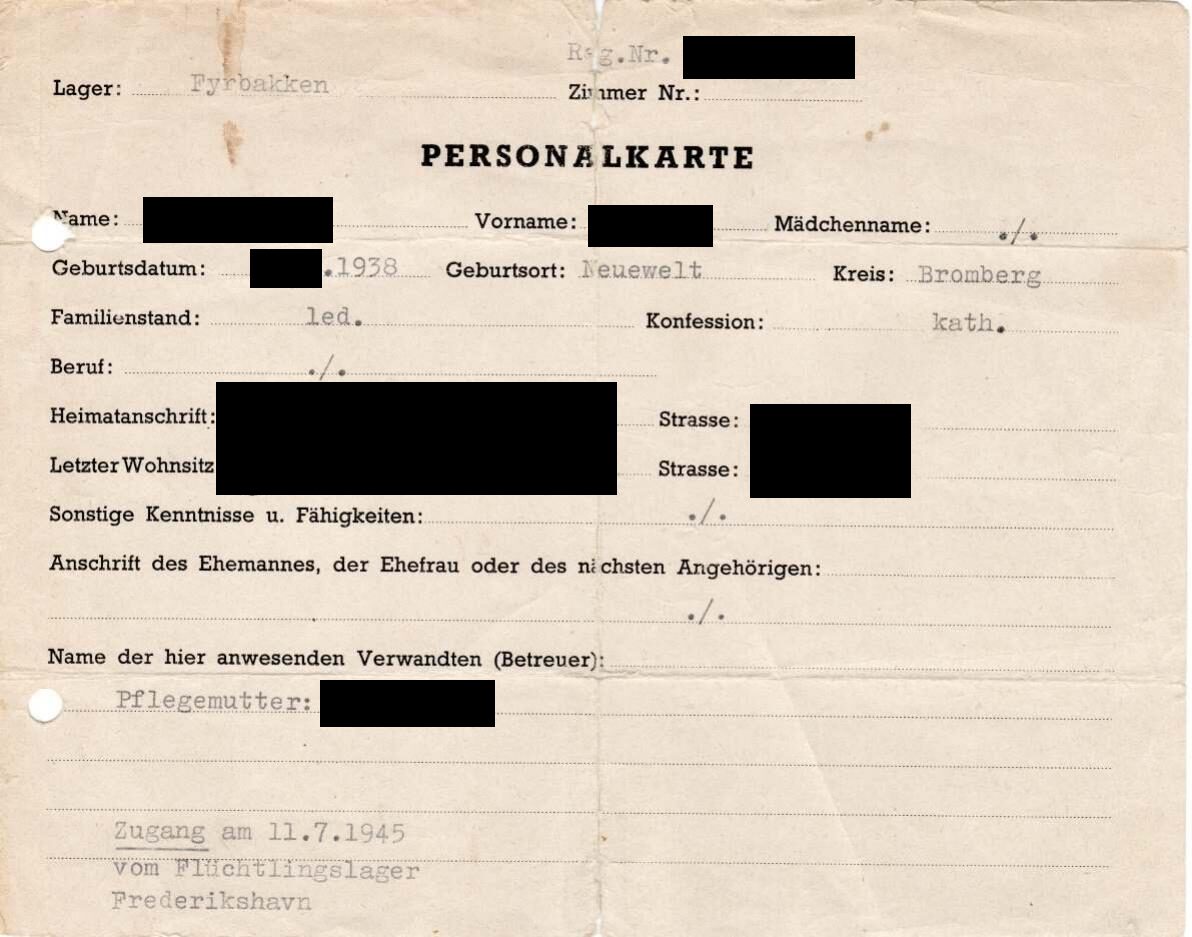
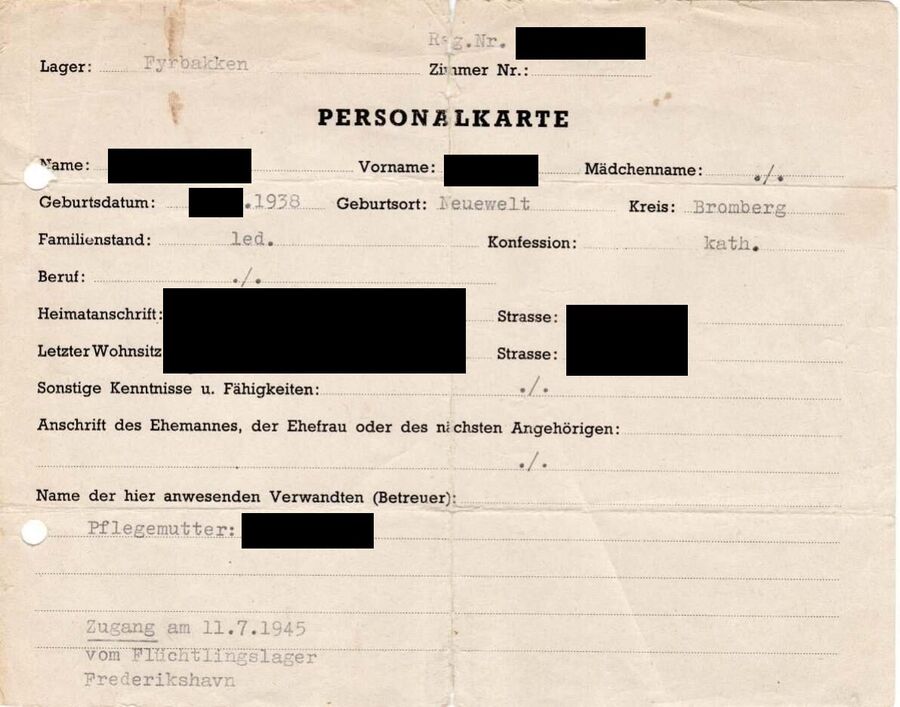
Camp Fyrbakken, Denmark, July 11, 1945. A clerk fills in a "personal card" for a new arrival, transferred from the refugee camp at Frederikshavn. Name, date of birth, birthplace: a village in the district of Bromberg. Marital status: single. Occupation: none. Other skills: none. Address of spouse or nearest relative: a dash. The form was made for adults, and its questions sound strange once you read the date of birth: the new arrival was born in 1938. She was seven. On the last line, under "relatives present here", the clerk did not write "mother". He wrote "foster mother", followed by a name. A whole world is hidden in that one word. The card does not say where her parents were. It only records who was there to hold her hand.
Click to enlarge
1947
Object of Journey: Marriage
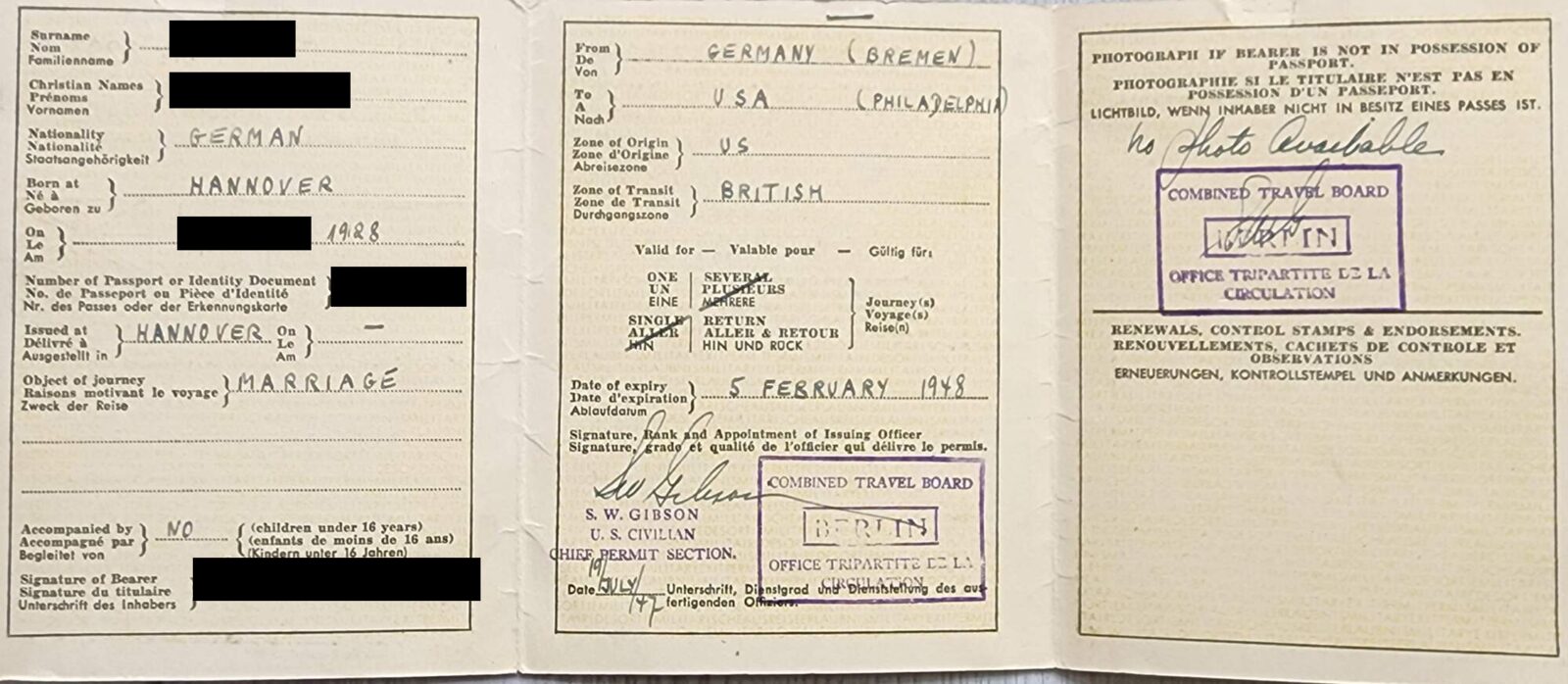
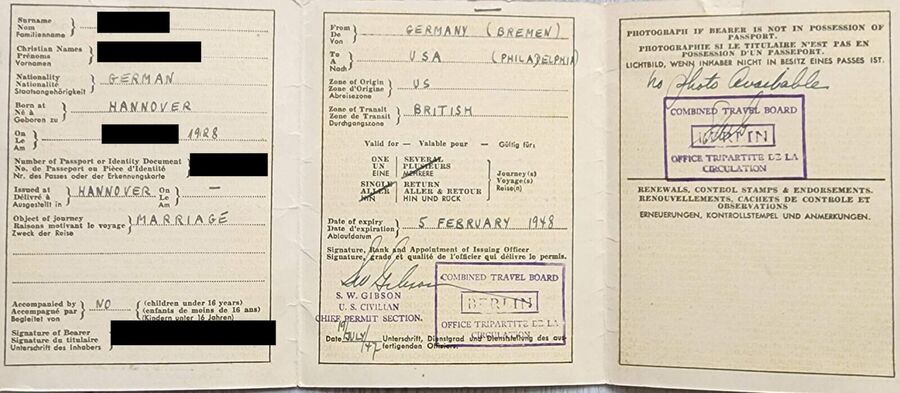
In July 1947 the Combined Travel Board in Berlin issued this exit permit to a young German woman born in Hannover in 1928. She was nineteen. From: Germany (Bremen). To: USA (Philadelphia). Valid for one journey. Accompanied by children: no. Object of journey, typed in capital letters: MARRIAGE. In the box where her photograph should have been, an officer wrote by hand: "no photo available". She did not even have a picture of herself to put on the paper. There is only a name, a signature in a careful hand, and one word that held her whole future. In the years after the war, thousands of young German women made this journey to marry American soldiers they had met in occupied Germany. A paper like this one, without even a photograph, was their way across.
1948
Citizenship at Birth: German
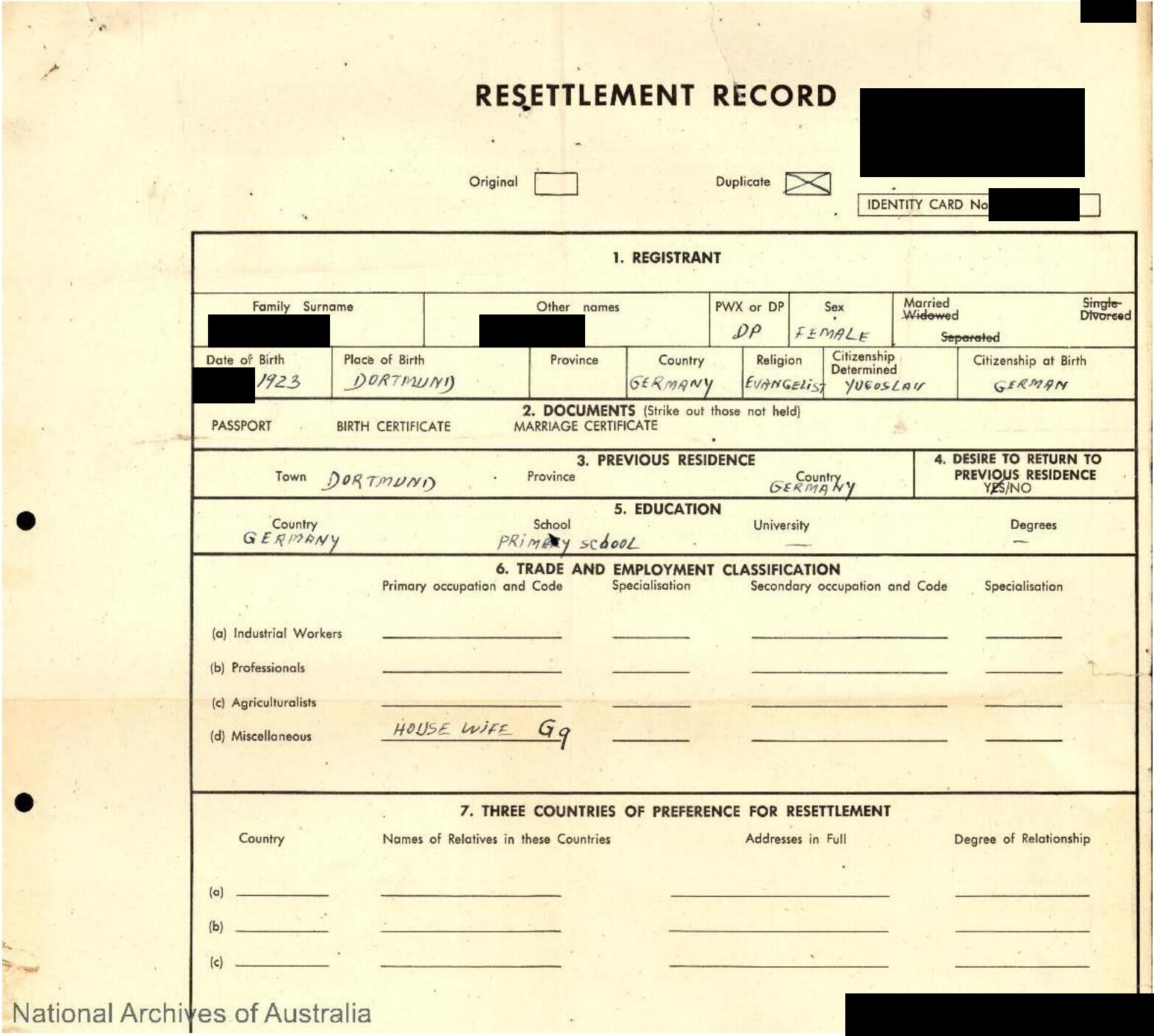
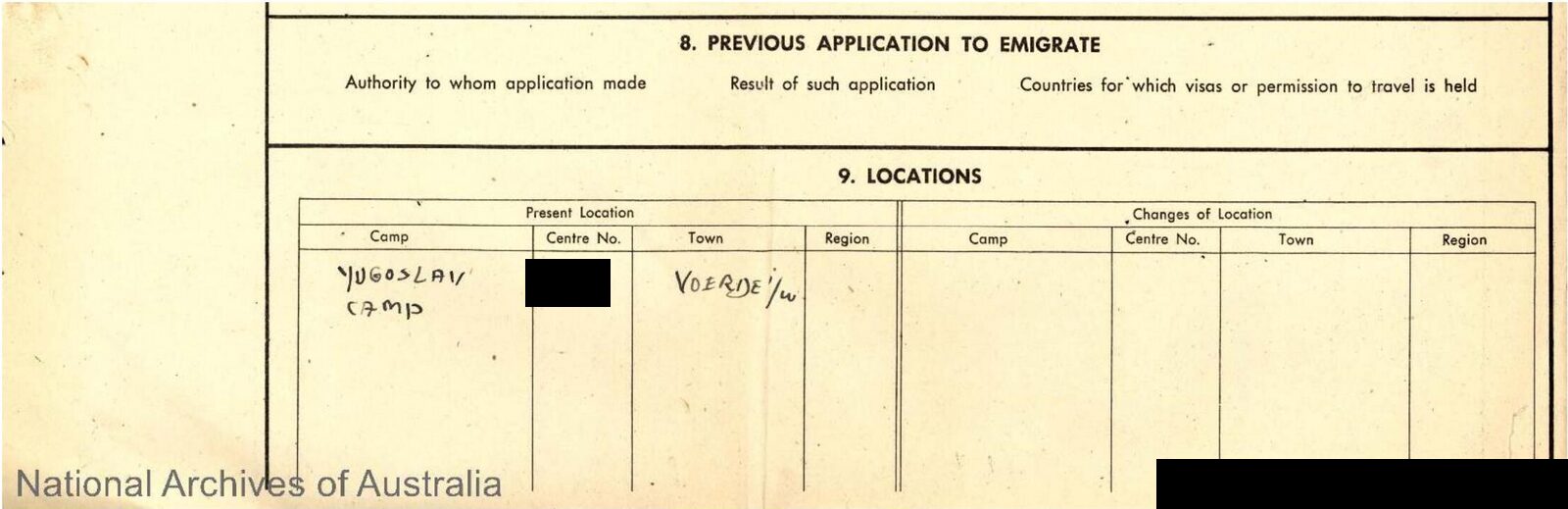
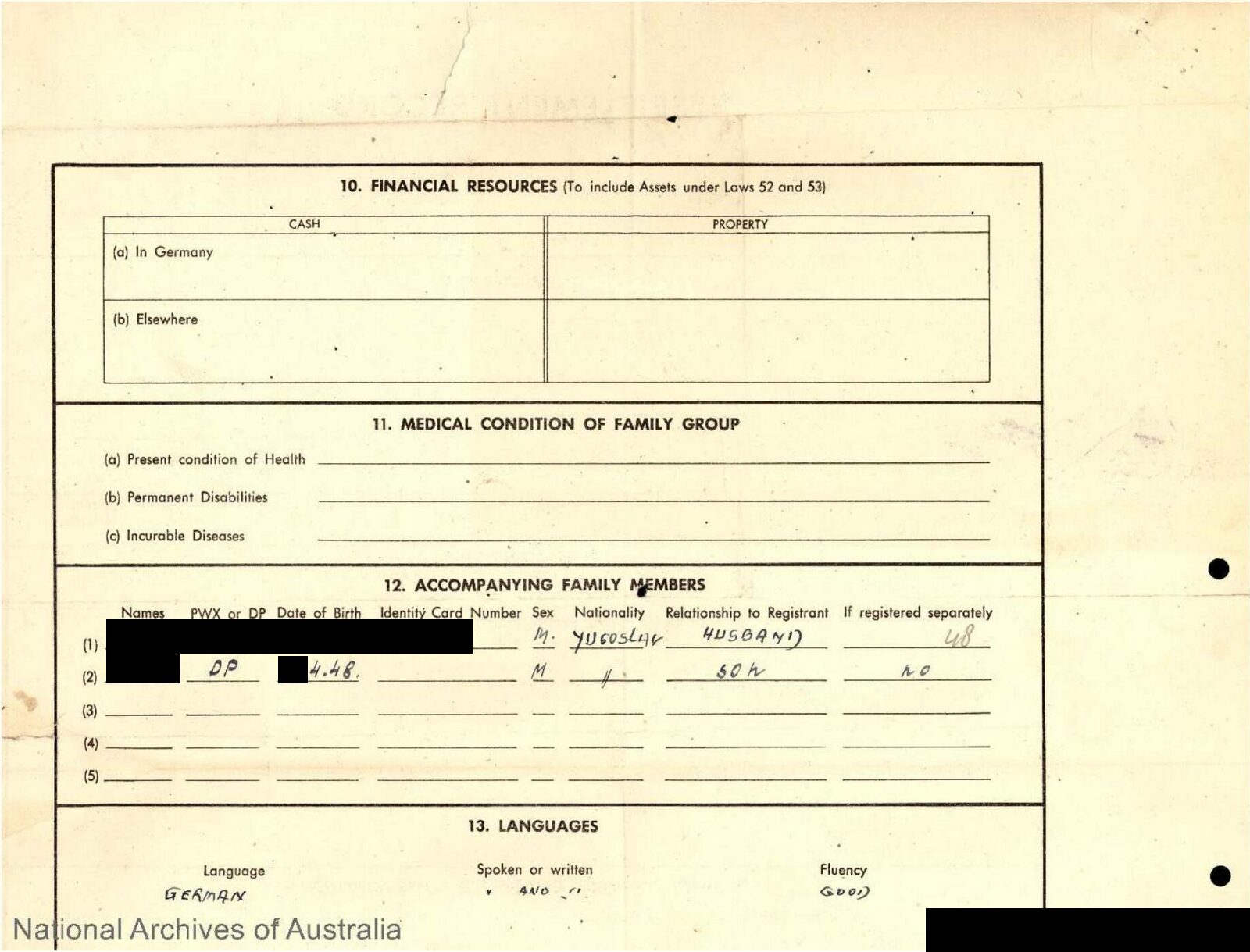
This is a resettlement record of the International Refugee Organization, filled out for a young woman. She was born in Dortmund, Germany, in 1923. Previous residence: Dortmund. School: primary school in Germany. Language: German. Occupation: housewife. Her present location, written on the back: a "Yugoslav camp" in Voerde, Westphalia. The last page shows why, under "accompanying family members": her husband, nationality Yugoslav, and their son, born in April 1948. She had followed her husband into the world of the refugee camps. One pair of boxes on the front shows what the marriage had changed on paper. "Citizenship at birth": GERMAN. "Citizenship determined": YUGOSLAV. In those years a German woman who married a foreigner usually lost her German citizenship. The form records the change in two words, as if it were a small matter.
Click to enlarge
1949
For Three or Four Weeks
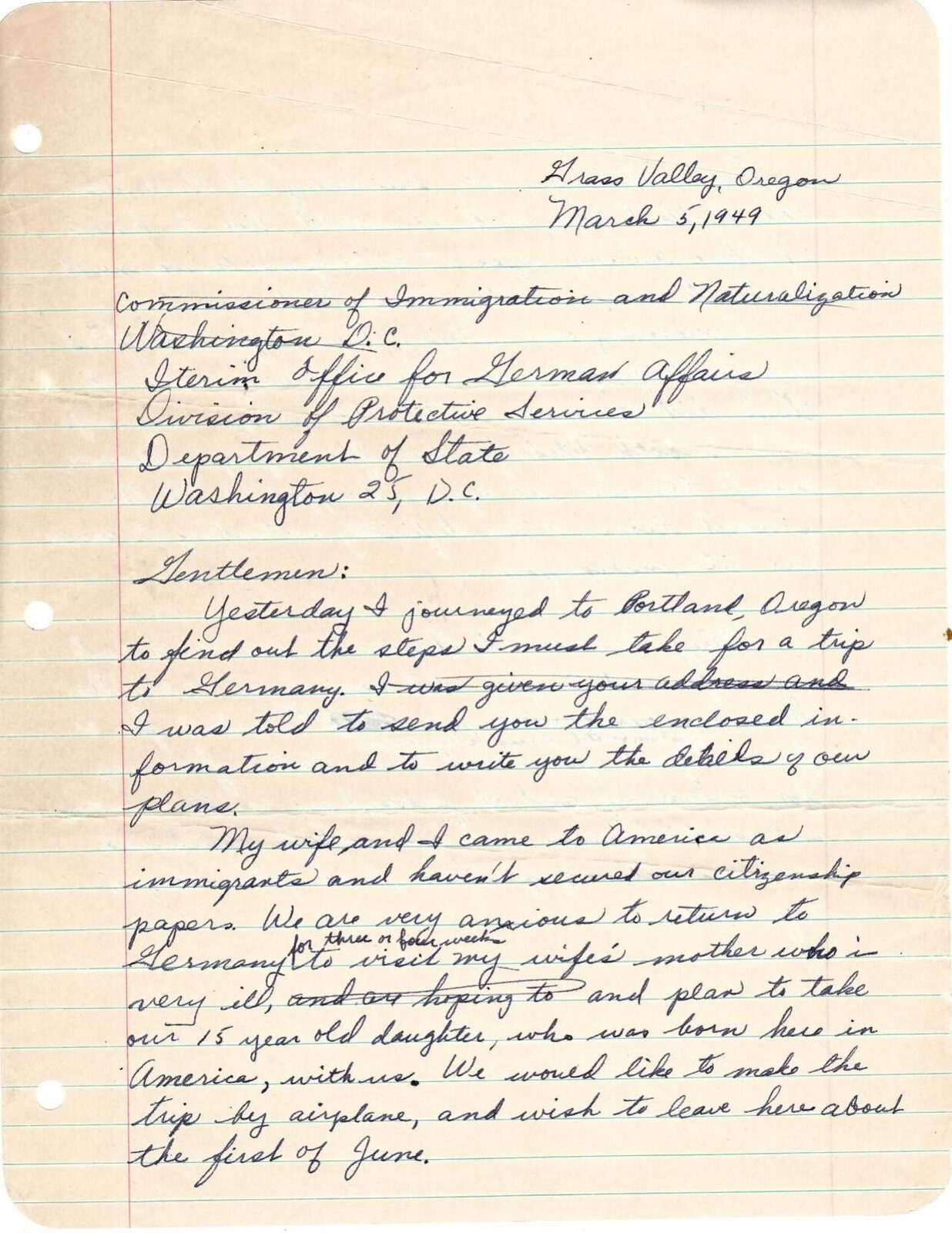
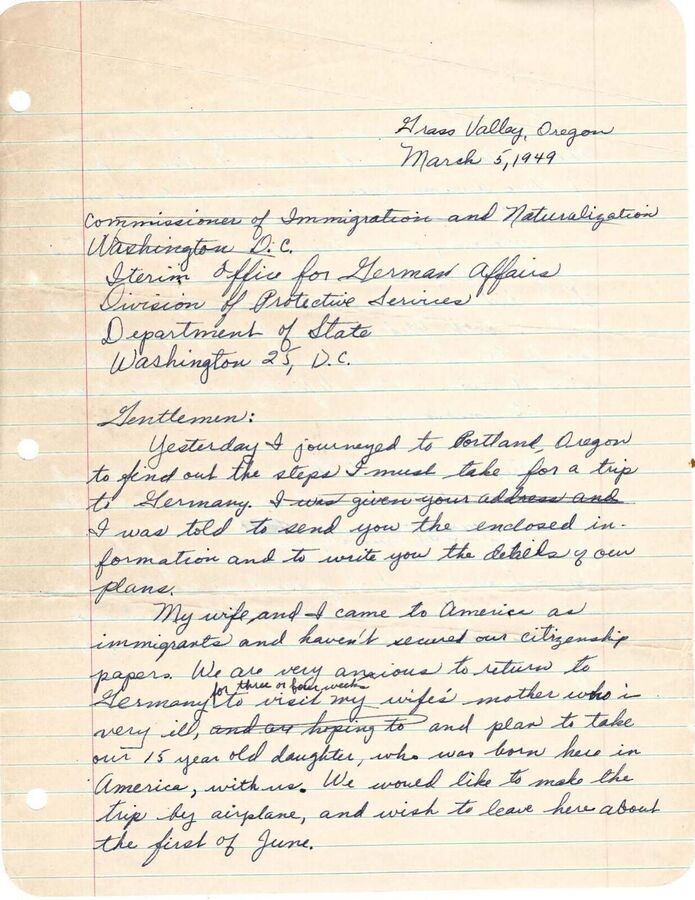
Grass Valley, Oregon, March 5, 1949. "Gentlemen: Yesterday I journeyed to Portland, Oregon to find out the steps I must take for a trip to Germany." The letter is handwritten on lined paper in a careful, slightly old-fashioned script. "My wife and I came to America as immigrants and haven't secured our citizenship papers. We are very anxious to return to Germany to visit my wife's mother who is very ill." Above the line he later squeezed in "for three or four weeks", as if to promise the government that they would certainly come back. They wanted to take their fifteen-year-old daughter, "who was born here in America", with them. They hoped to go by airplane and to leave "about the first of June". A whole family's longing, folded into one sheet of paper.
2 pages · click to enlarge
1950
A Life in One Crate
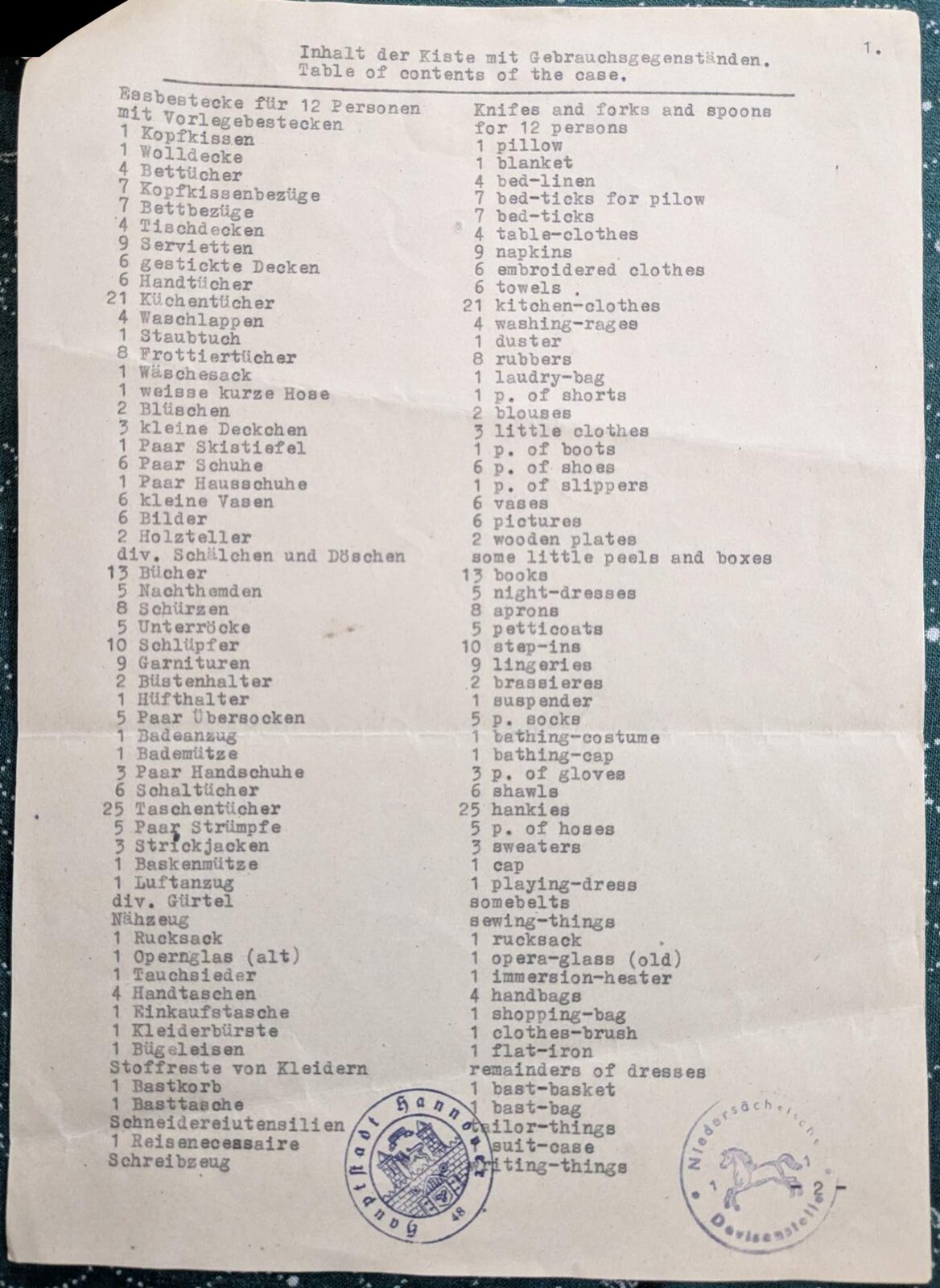
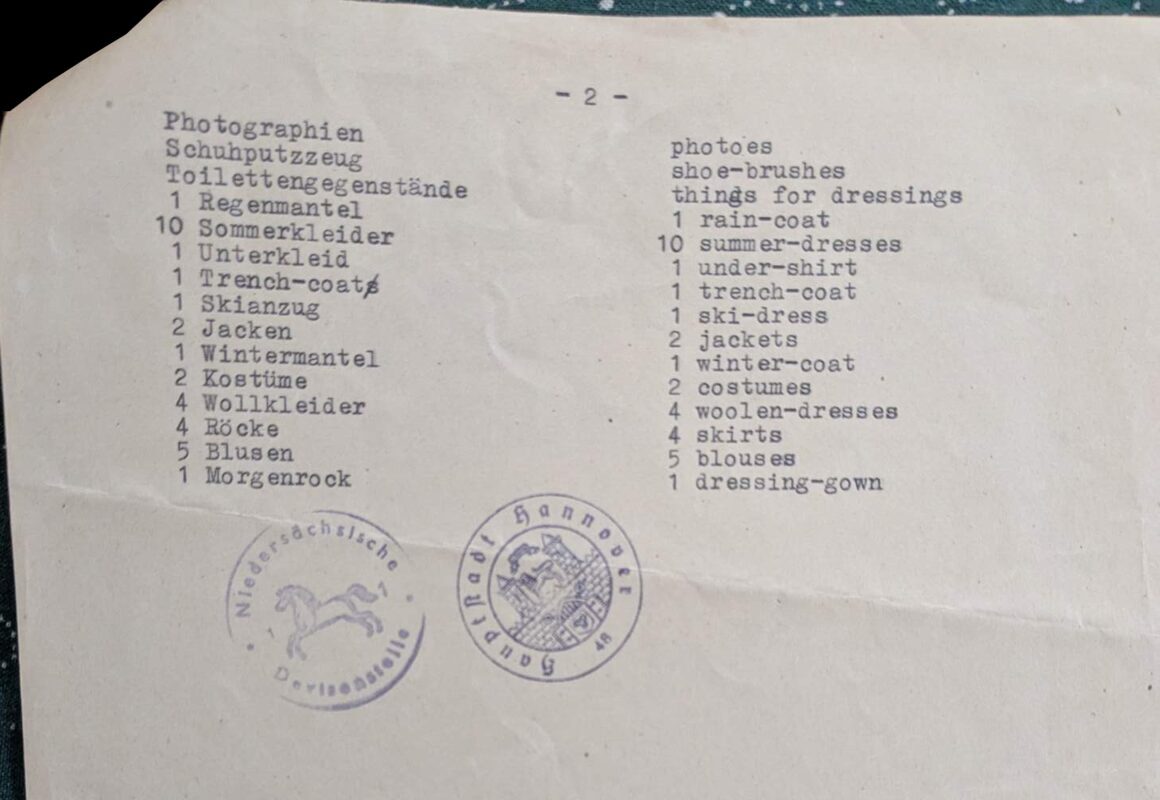
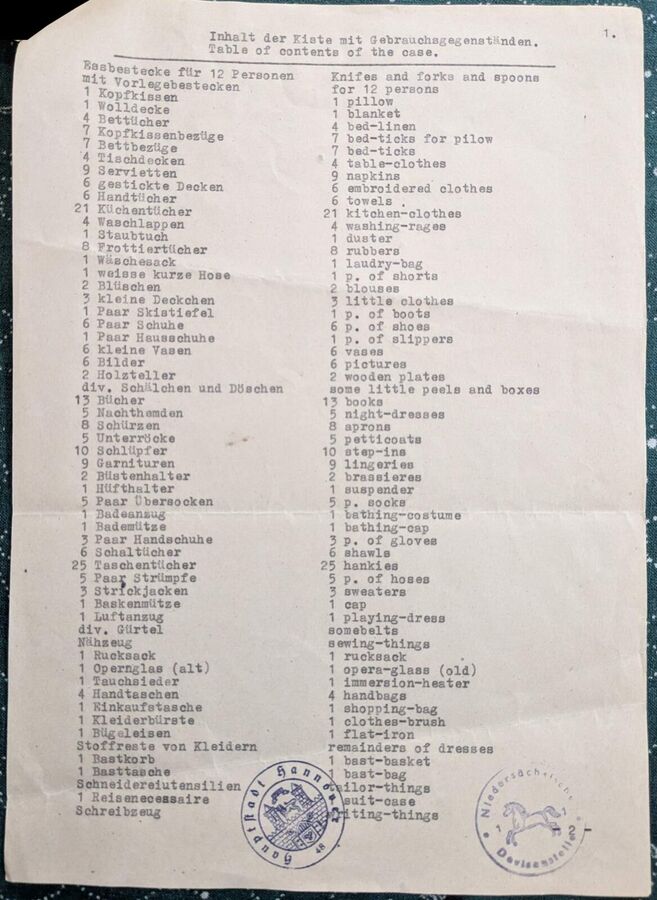
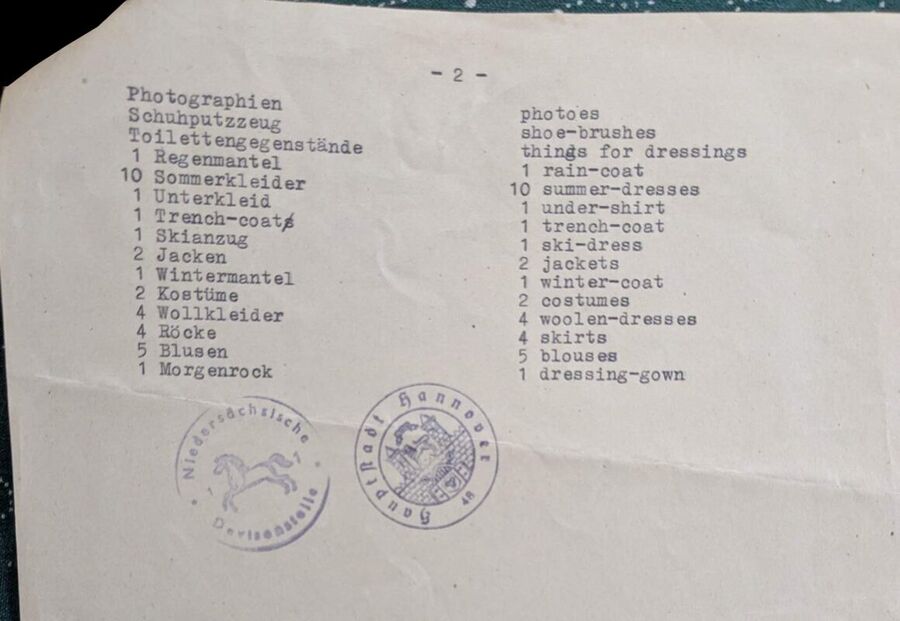
Hannover, around 1950. Before anything could leave the country, the currency control office wanted to know exactly what was inside. So someone typed this list in German and English: "Table of contents of the case." Knives, forks and spoons for twelve persons. Embroidered cloths. Twenty-one kitchen towels. Six pictures, six little vases, thirteen books, twenty-five handkerchiefs. One opera glass (old). One immersion heater. Sewing things, tailor's tools and "remainders of dresses", the scraps of fabric only a dressmaker would think worth taking across an ocean. On the second page: photographs, ten summer dresses, a ski suit, a winter coat, one dressing gown. Every line is a decision about what to keep. And the cutlery for twelve says the most: whoever packed this crate was planning a table full of people in a new life.
1952
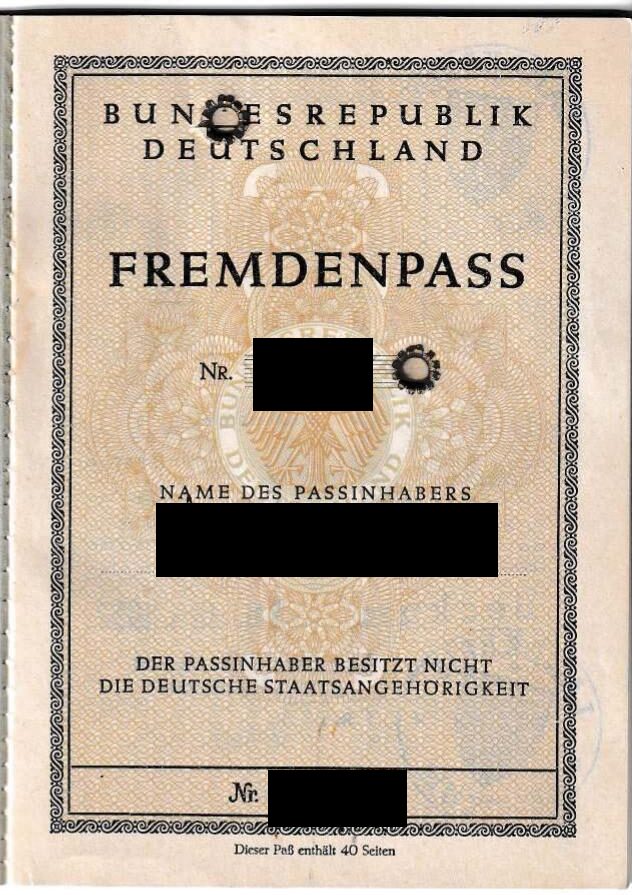
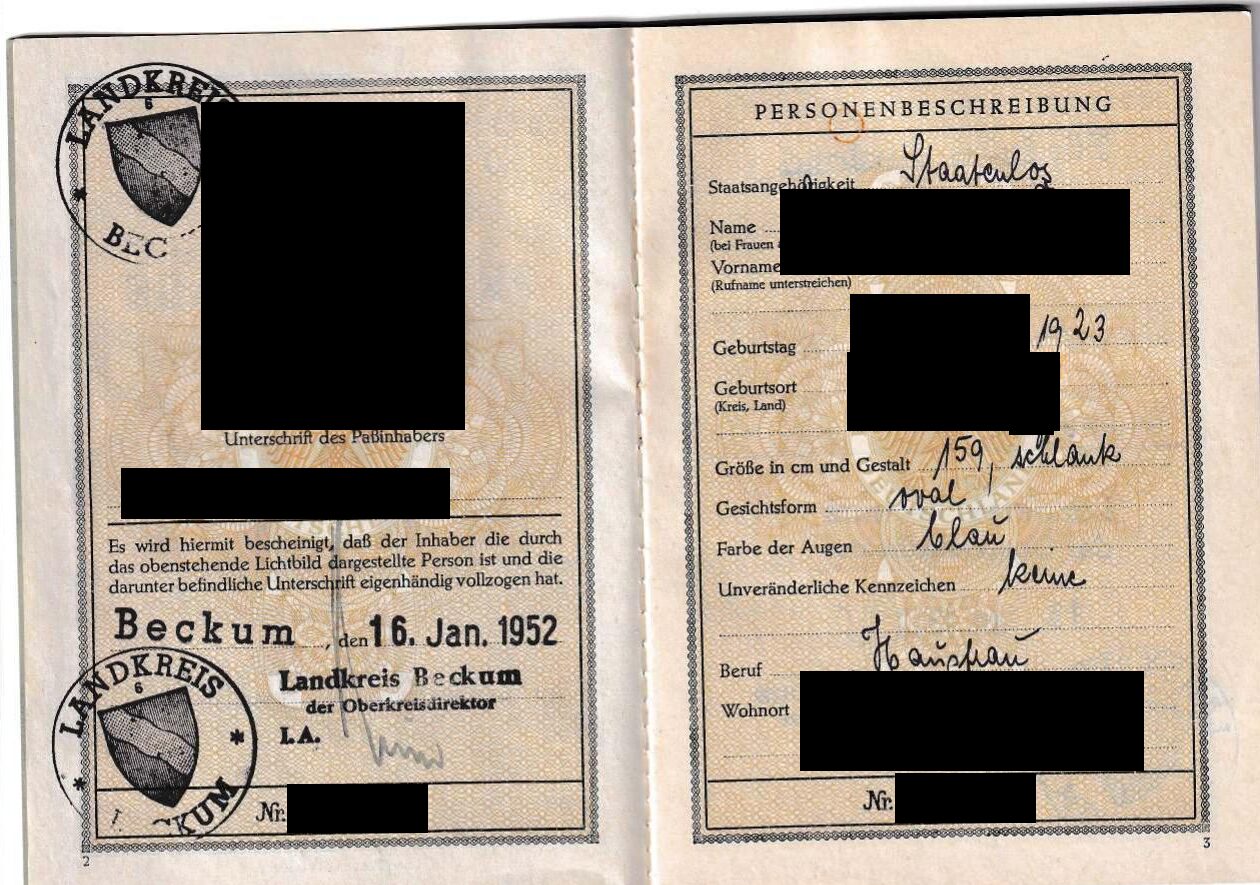
Not German
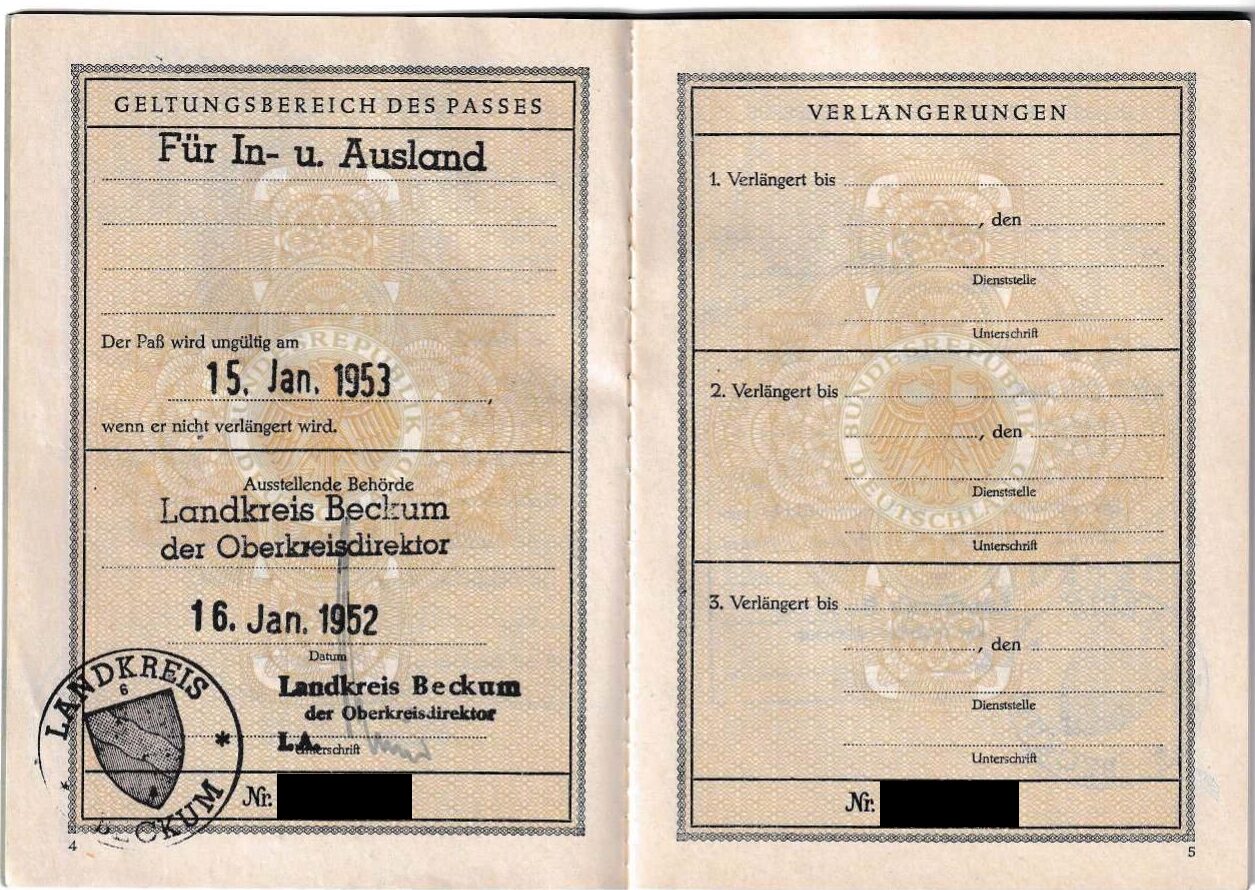
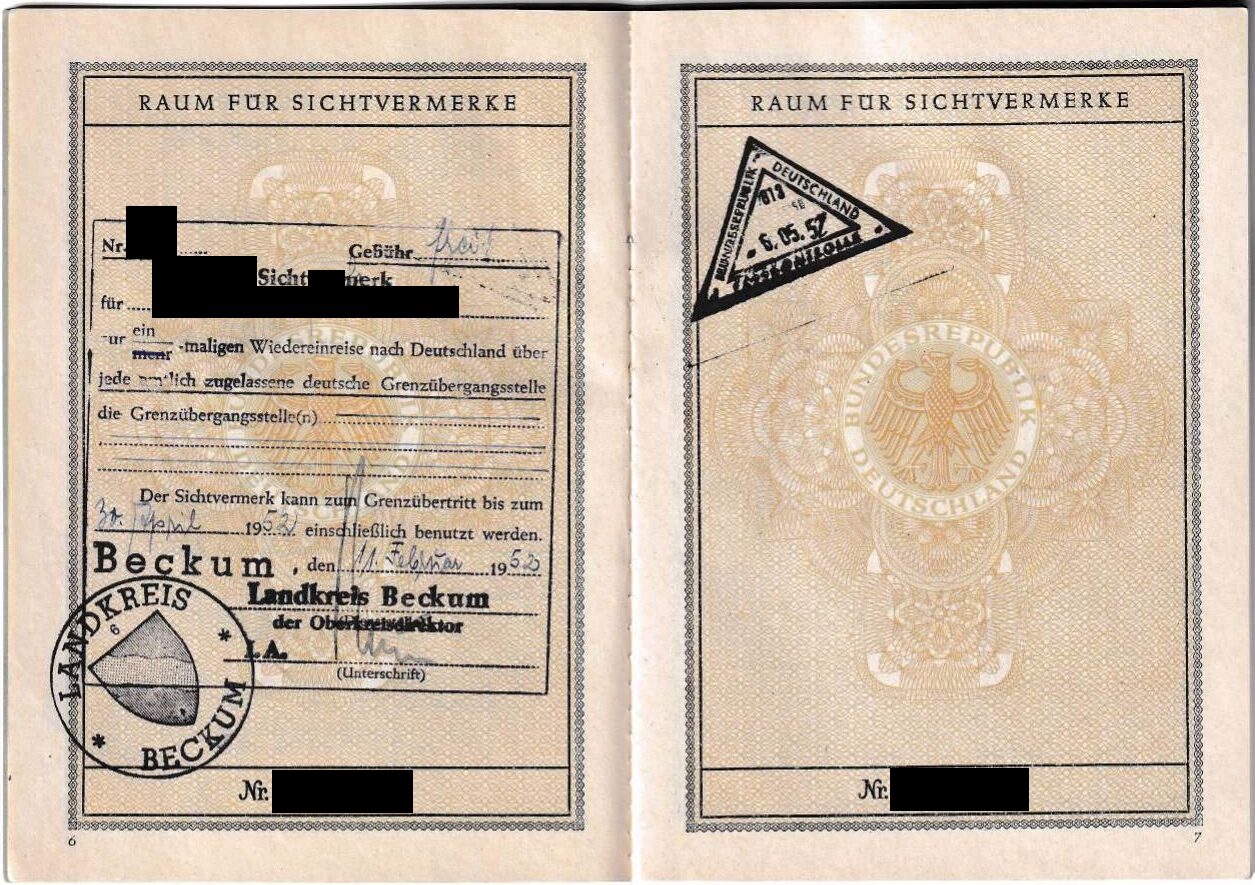
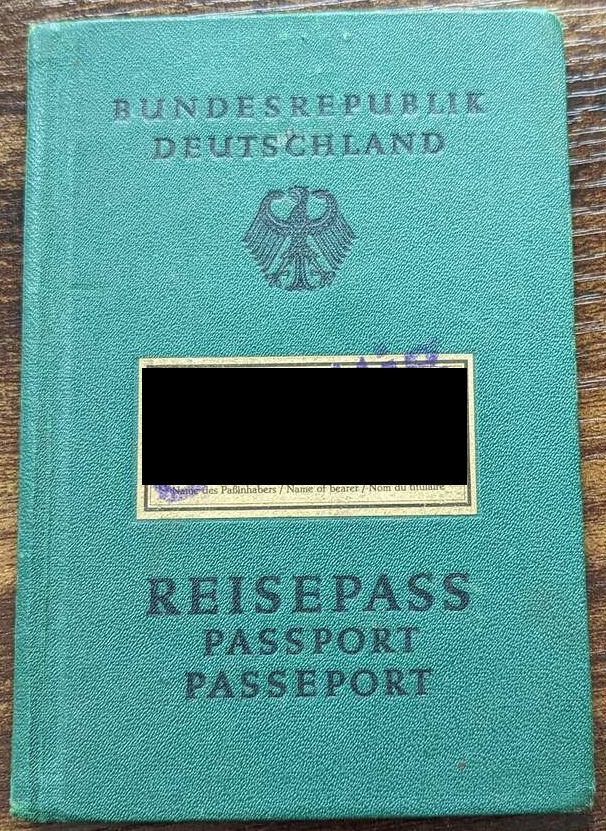
January 16, 1952. The district of Beckum in Westphalia issues a passport. On its title page, under the name of the Federal Republic of Germany, stands the name of a young woman, and below it, printed in capital letters: THE HOLDER OF THIS PASSPORT DOES NOT POSSESS GERMAN CITIZENSHIP. Inside, under nationality, an official wrote a single word: stateless. She was twenty-eight and a housewife. Her height, the shape of her face and the colour of her eyes (blue) are all carefully recorded. Everything about her is described except where she belongs. It was a passport for people who had no country of their own, valid for one year. A few weeks later the district added a visa for a single return into Germany. It is hard to imagine a lonelier document, or a more precious one.
Click to enlarge
1952
Home Address: Camp
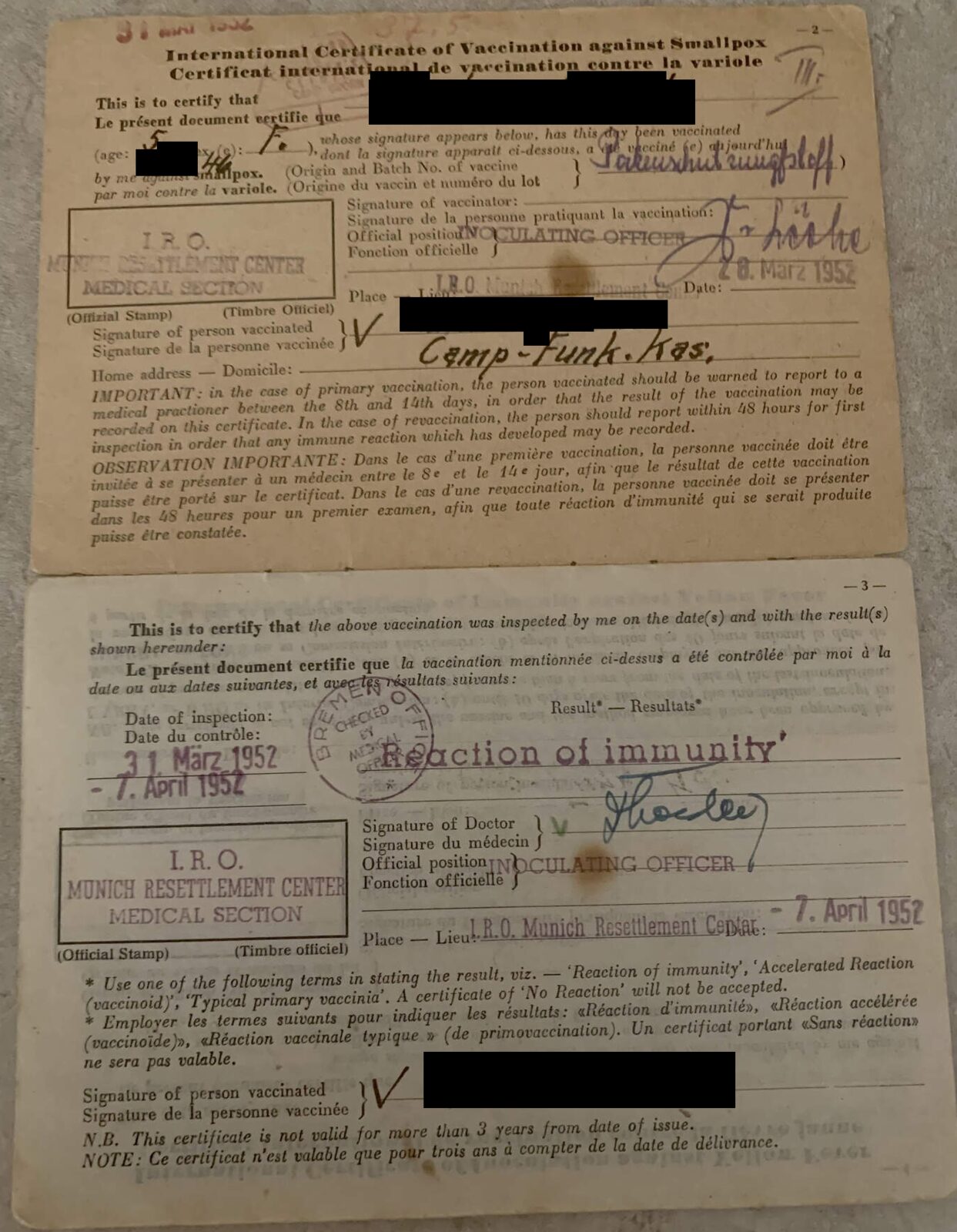
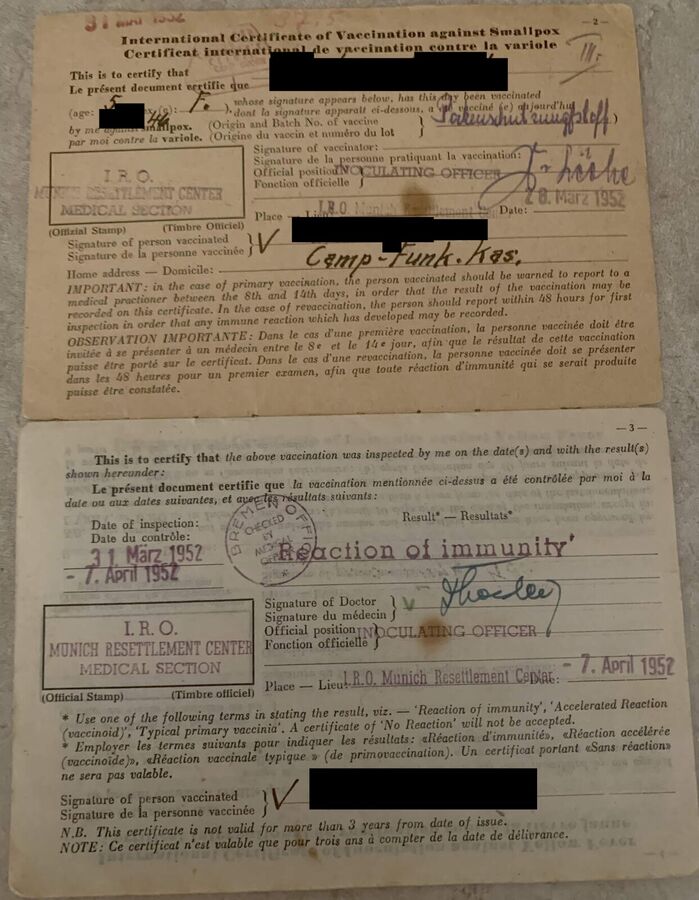
March 28, 1952. At the Munich Resettlement Center of the International Refugee Organization, an inoculating officer vaccinates a girl against smallpox and fills in an international certificate in English and French. Age: 5. Sex: F. Under "home address" someone wrote the name of an army barracks: Camp Funk-Kaserne. A few days later the doctor checked her arm and wrote "Reaction of immunity": she was ready. Across the result sits a round stamp of the Bremen office: checked by the medical officer. Every emigrating family went through this ritual of forms and needles. For a five-year-old it was simply the day she had to be brave.
2 pages · click to enlarge
1958
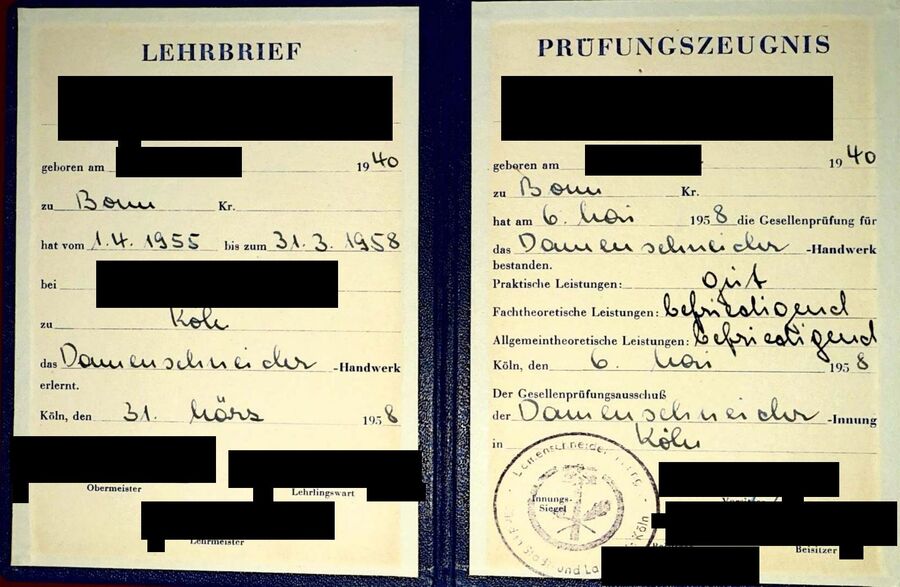
Ladies' Tailor, Grade: Good
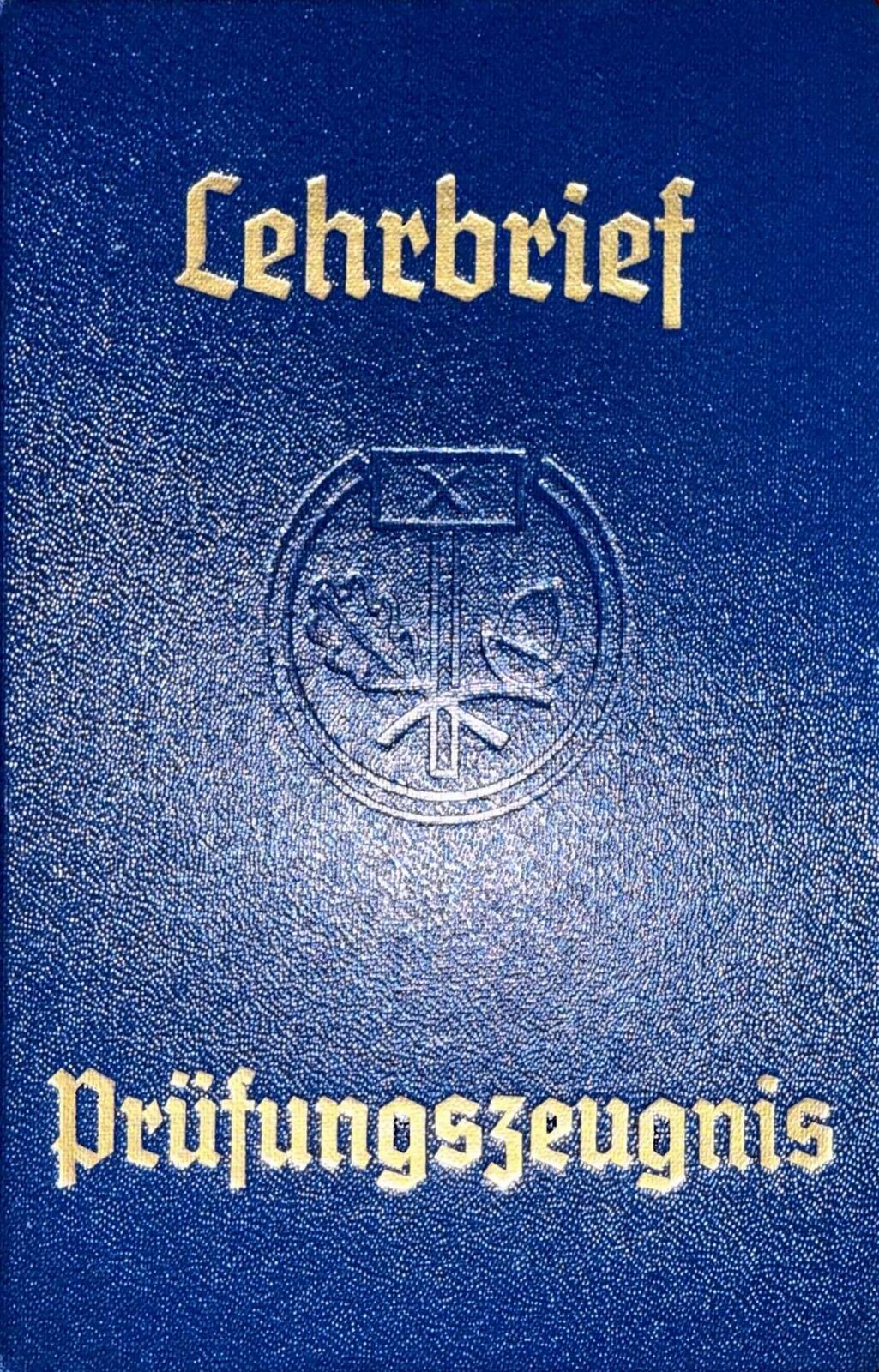
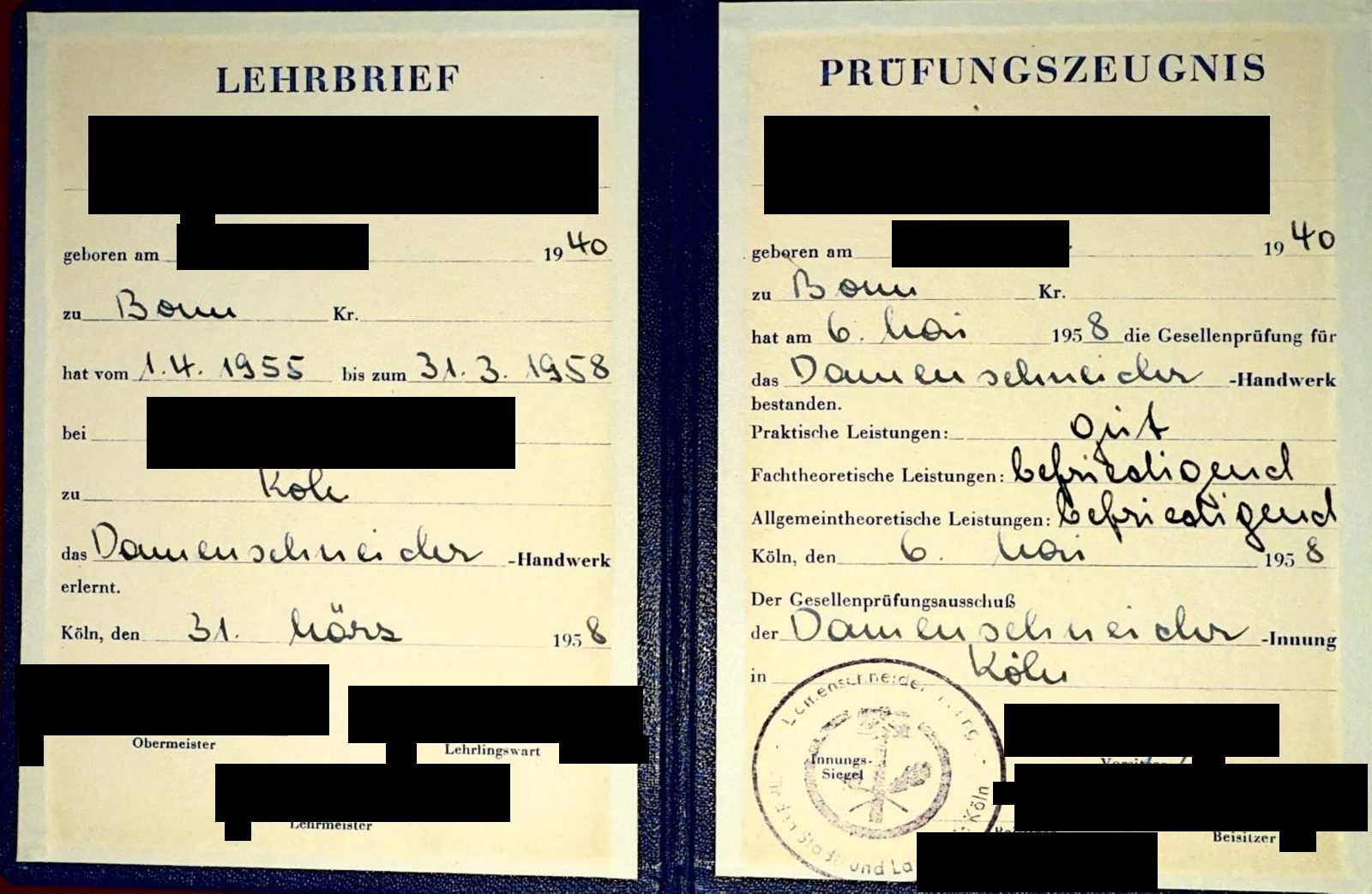
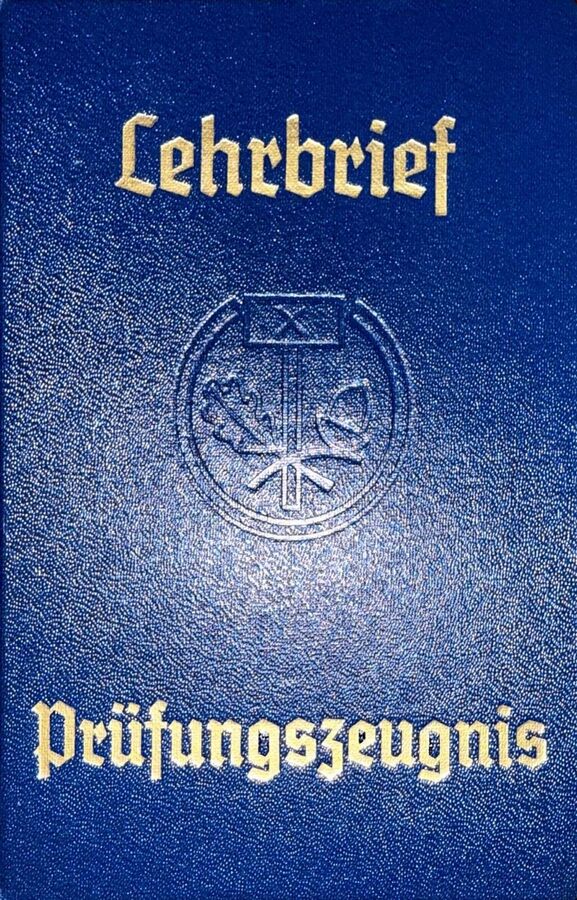
A small blue booklet with gold letters: Lehrbrief, Prüfungszeugnis. Inside is the story of three years. On April 1, 1955, a girl born in Bonn in 1940 began an apprenticeship in ladies' tailoring with a master dressmaker in Cologne. She was fourteen. On March 31, 1958, three signatures closed her apprenticeship certificate: the guild master, the apprentice warden and her own master, each by hand. Five weeks later, on May 6, 1958, she stood before the examination board. Practical work: good. Theory: satisfactory. Seventeen years old, and a journeywoman. Families tuck documents like this away in drawers. There is no drama in it and no border crossing, only the pride of a young woman who had learned to make something beautiful with her hands.
1959
Single Journey Only
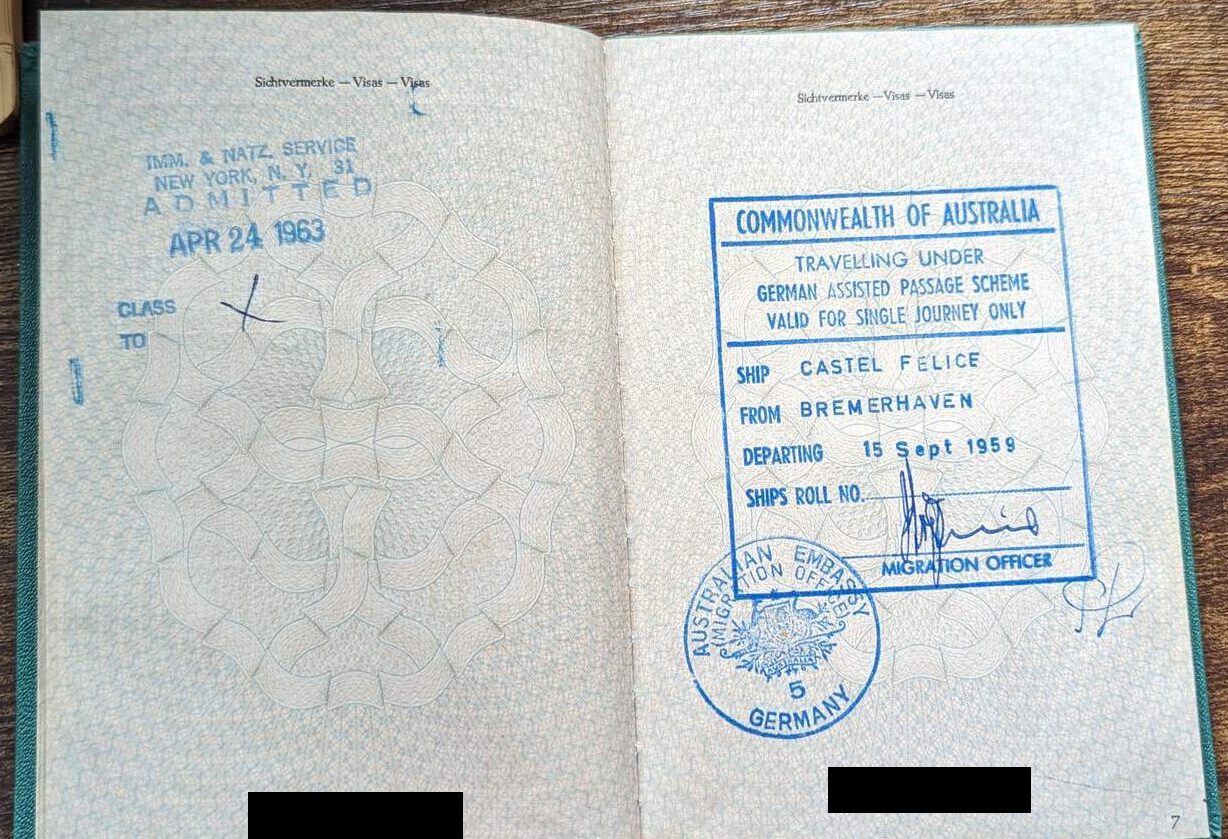
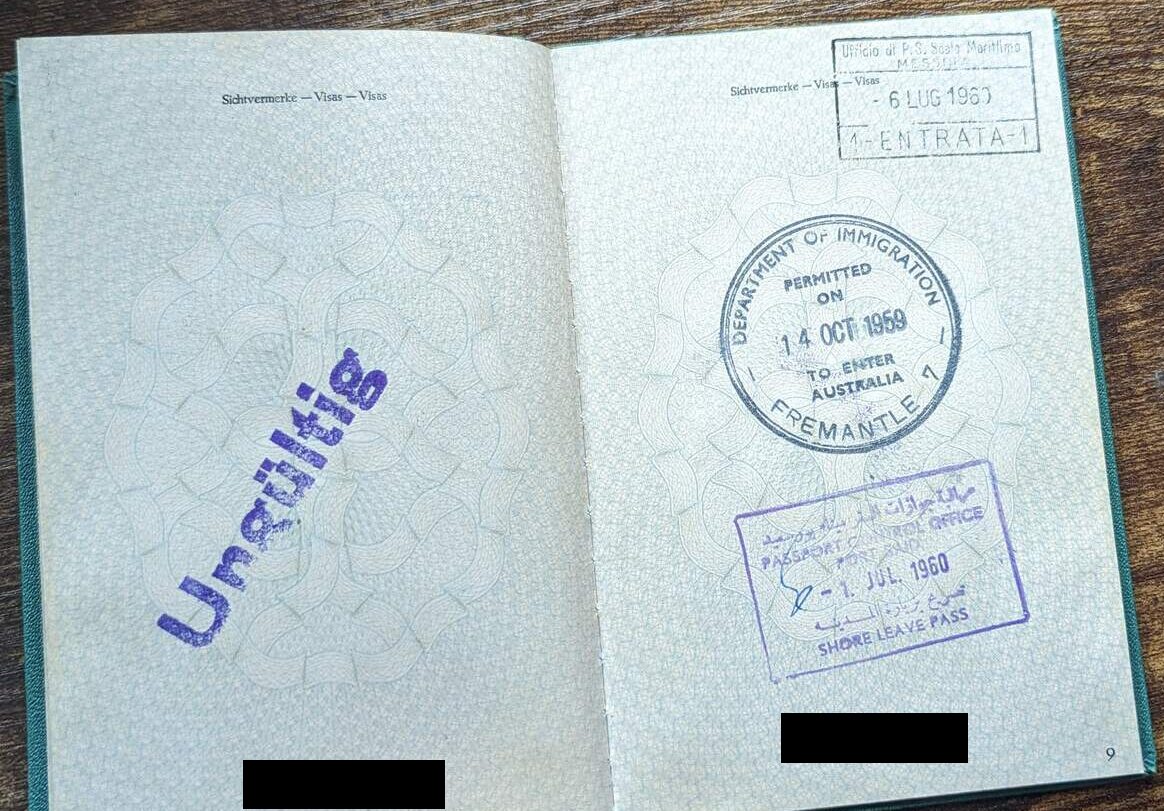
One German passport, five stamps, and a journey around the world. The first stamp: "Commonwealth of Australia. Travelling under German Assisted Passage Scheme. Valid for single journey only. Ship: Castel Felice. From Bremerhaven. Departing 15 Sept 1959." A one-way ticket to the other side of the world. The next: "Permitted on 14 Oct 1959 to enter Australia, Fremantle." Then, only nine months later, comes a shore leave pass at Port Said on July 1, 1960, and Messina on July 6: the ship was heading back to Europe. Three years after that comes a last stamp: Immigration and Naturalization Service, New York, ADMITTED, April 24, 1963. "Single journey only", the Australian officer had written. Life had other plans. Hidden between these stamps are two new beginnings, and a courage most of us can only imagine.
Click to enlarge
1965
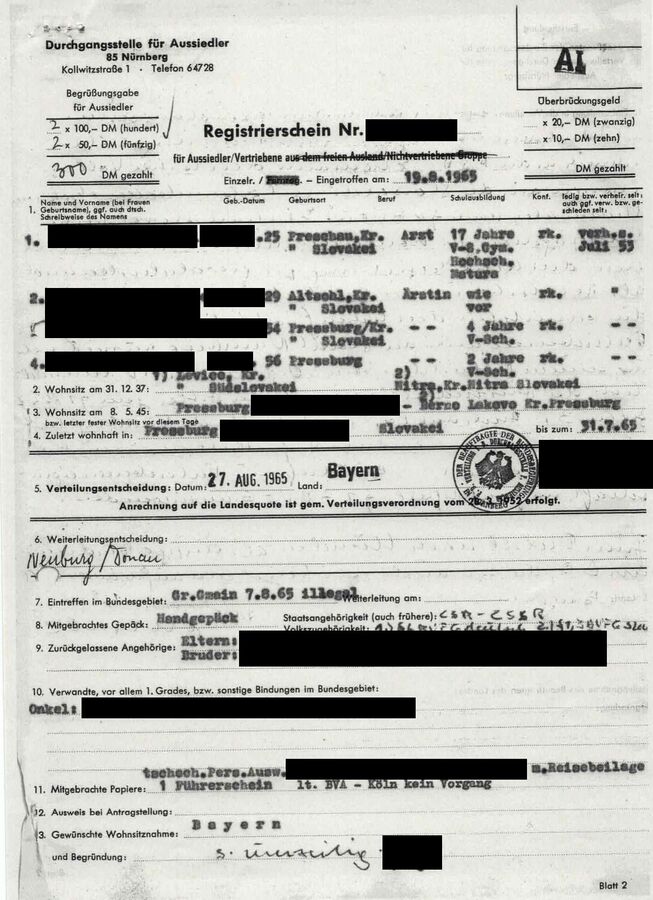
Hand Luggage
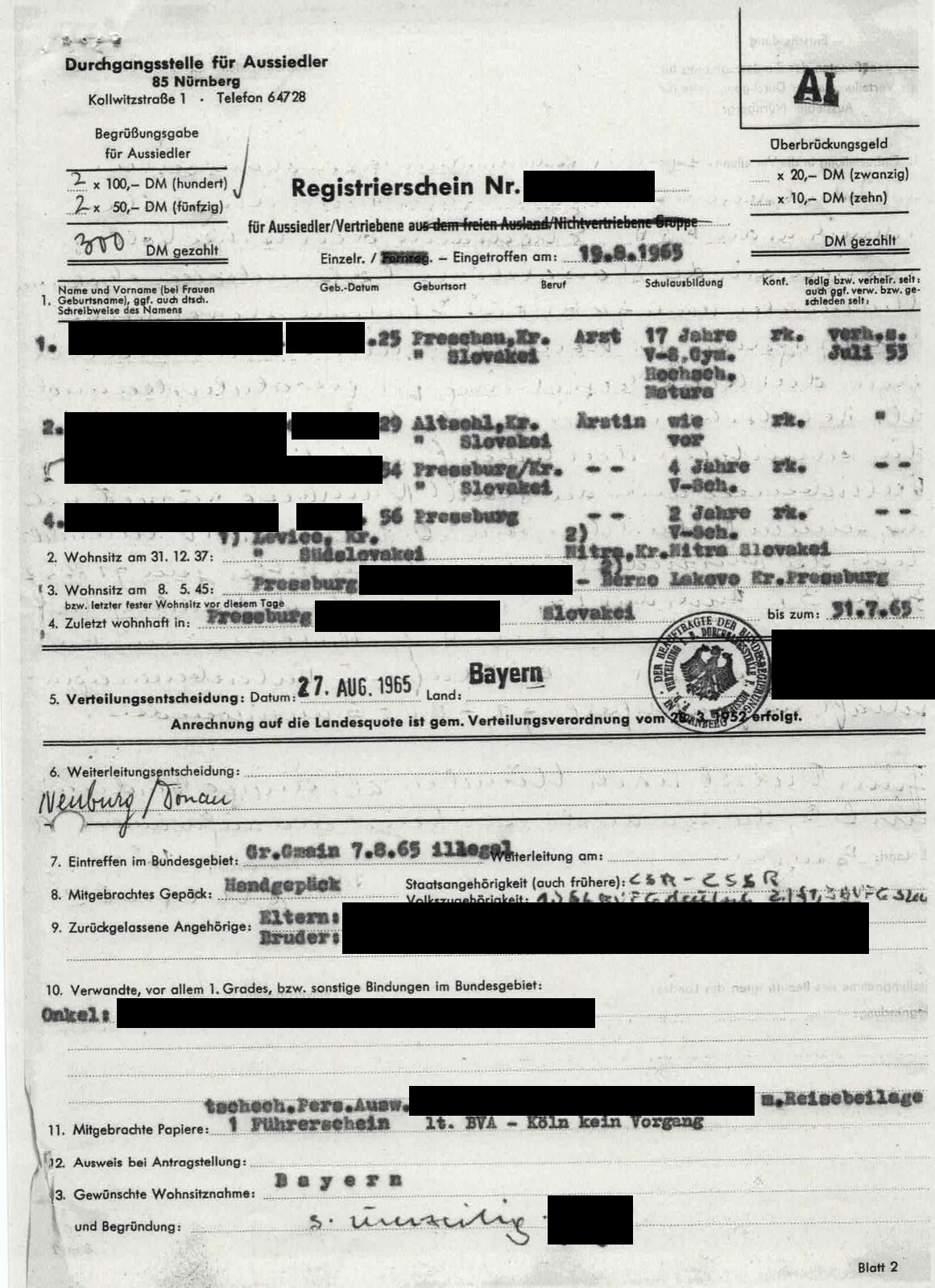
Nuremberg, August 19, 1965. At the transit office for ethnic German resettlers, a clerk types up a family's registration slip. There are four people: a doctor, his wife, also a doctor, and two children aged ten and eight. Last residence: Pressburg, Slovakia, until July 31, 1965. Arrival in the Federal Republic: at Großgmain, coming over the border from Austria, on August 7, 1965, followed by one word typed without comment: "illegal". Luggage brought: hand luggage. Papers brought: Czechoslovak identity cards and one driver's licence. Relatives left behind: parents, a brother. At the top of the slip is the welcome money: two times 100 marks and two times 50 marks. Three hundred marks, what they could carry in their hands, and the courage to leave everything else behind the Iron Curtain.
Click to enlarge
1969
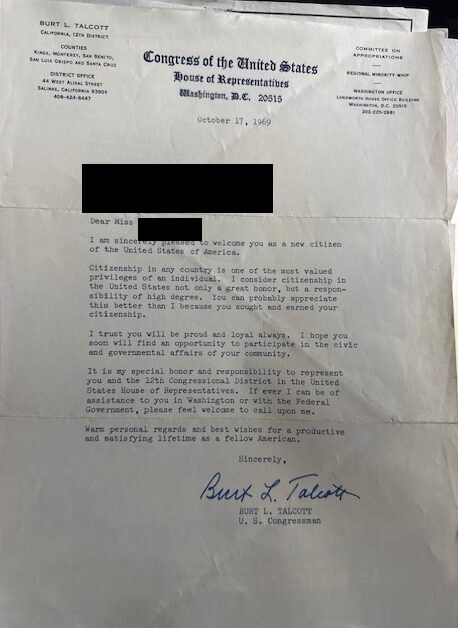
A Fellow American
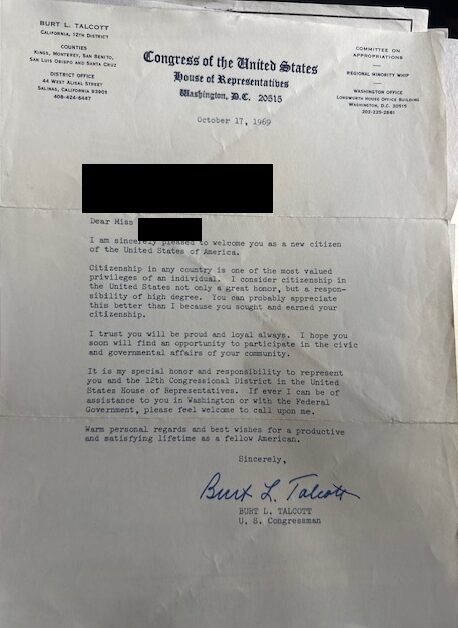
October 17, 1969. A congressman in Washington writes to a woman in California: "I am sincerely pleased to welcome you as a new citizen of the United States of America." It is a form letter, and it is still moving. "You can probably appreciate this better than I," he writes, "because you sought and earned your citizenship." He closes with "best wishes for a productive and satisfying lifetime as a fellow American." Someone kept this letter for more than fifty years. Becoming American was a proud day. For many immigrants it was also the day an old belonging slipped away quietly, without any letter at all. Today their grandchildren go looking for it in the archives.