How do certified copies work?
This FAQ section only applies to documents from Germany, the US, Canada, UK, Australia, New Zealand.
A certified copy is any copy of a document where an institution of authority confirmed that the copy shows the original document. Colloquially, some people also call it a notarized copy.
Examples
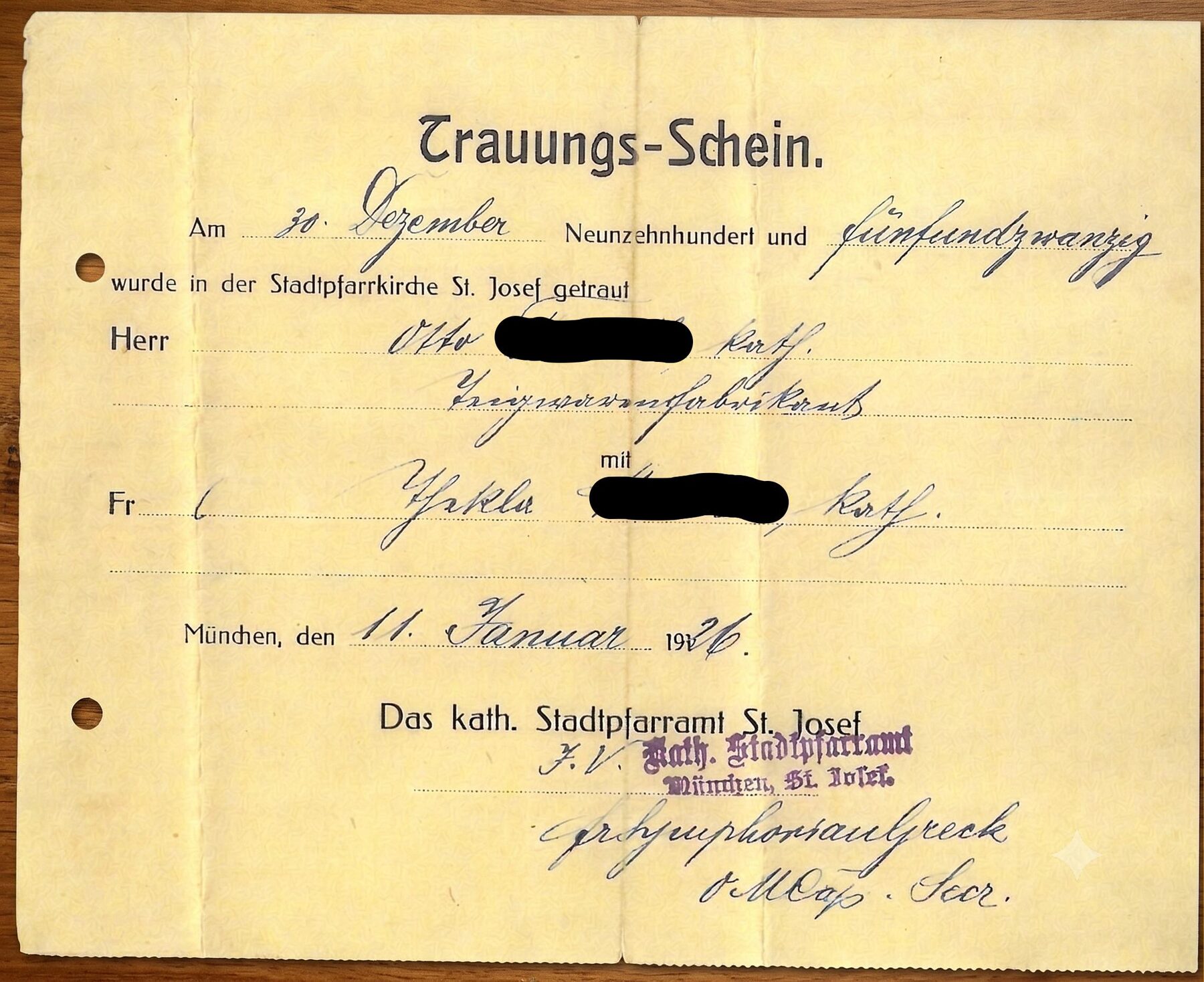
This is an original document.
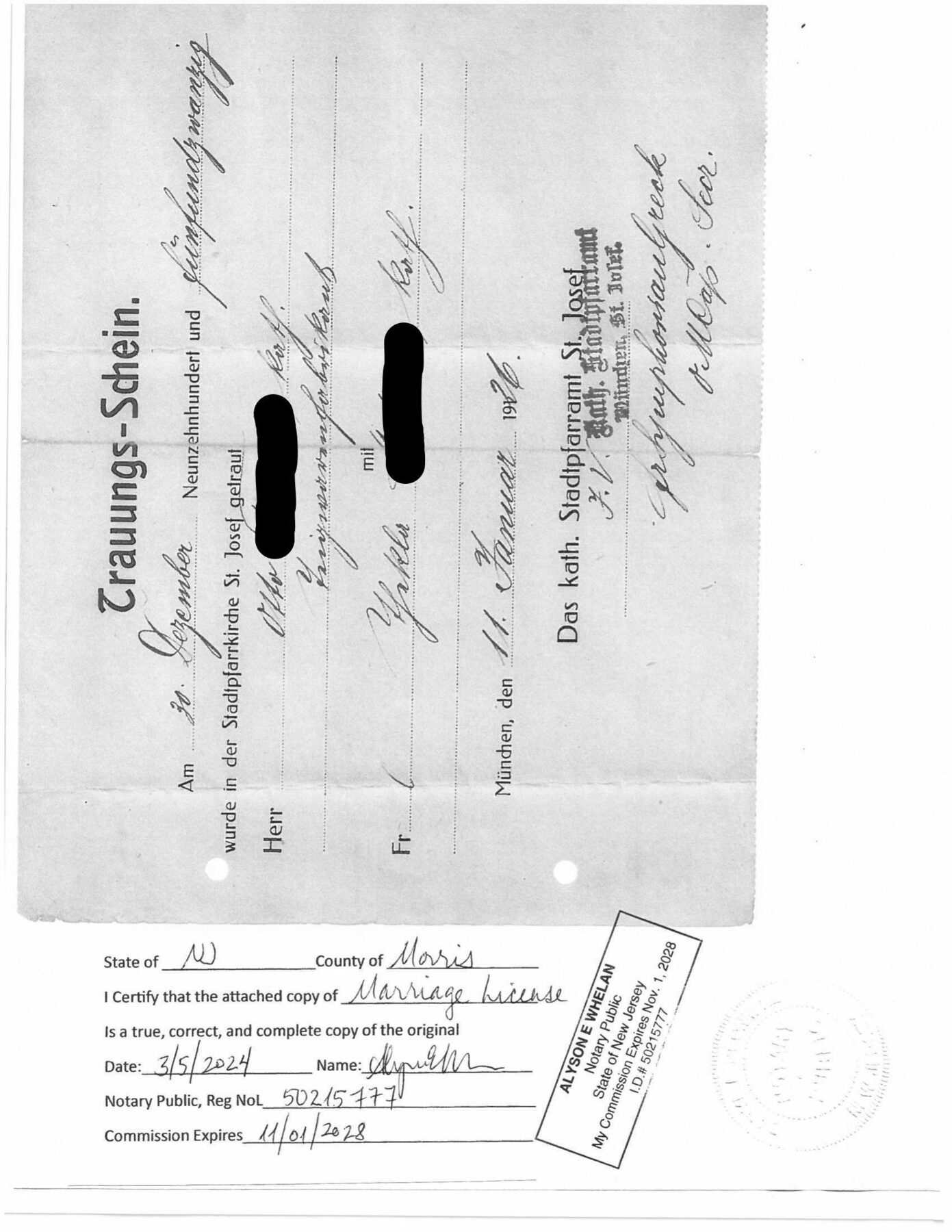
This is a certified copy of the same document: A notary public in the US made a copy of the original document, added a statement that says "I certify that the attached copy is a true, correct, and complete copy of the original", signed that statement, and stamped it.
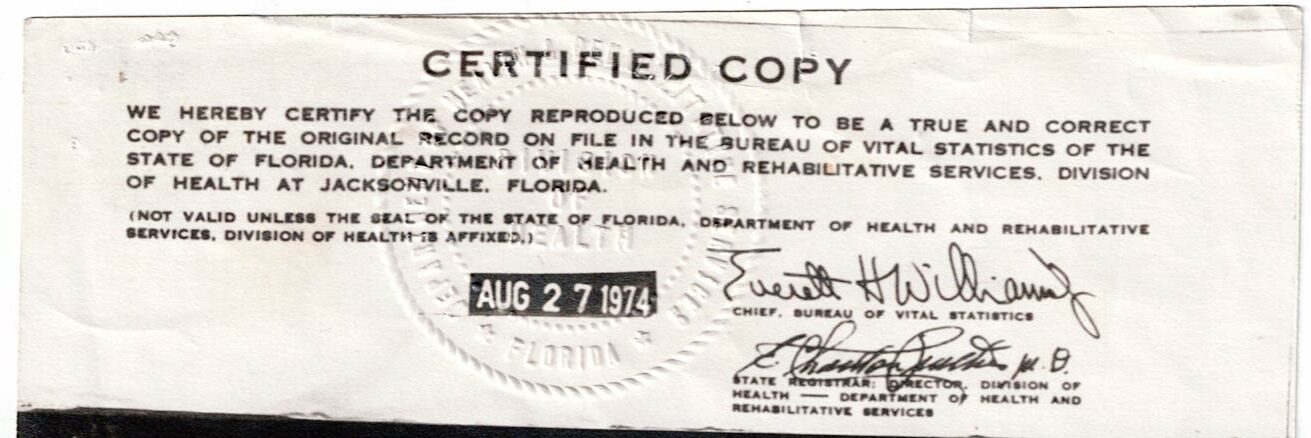
Here are 14 more copy certification examples.
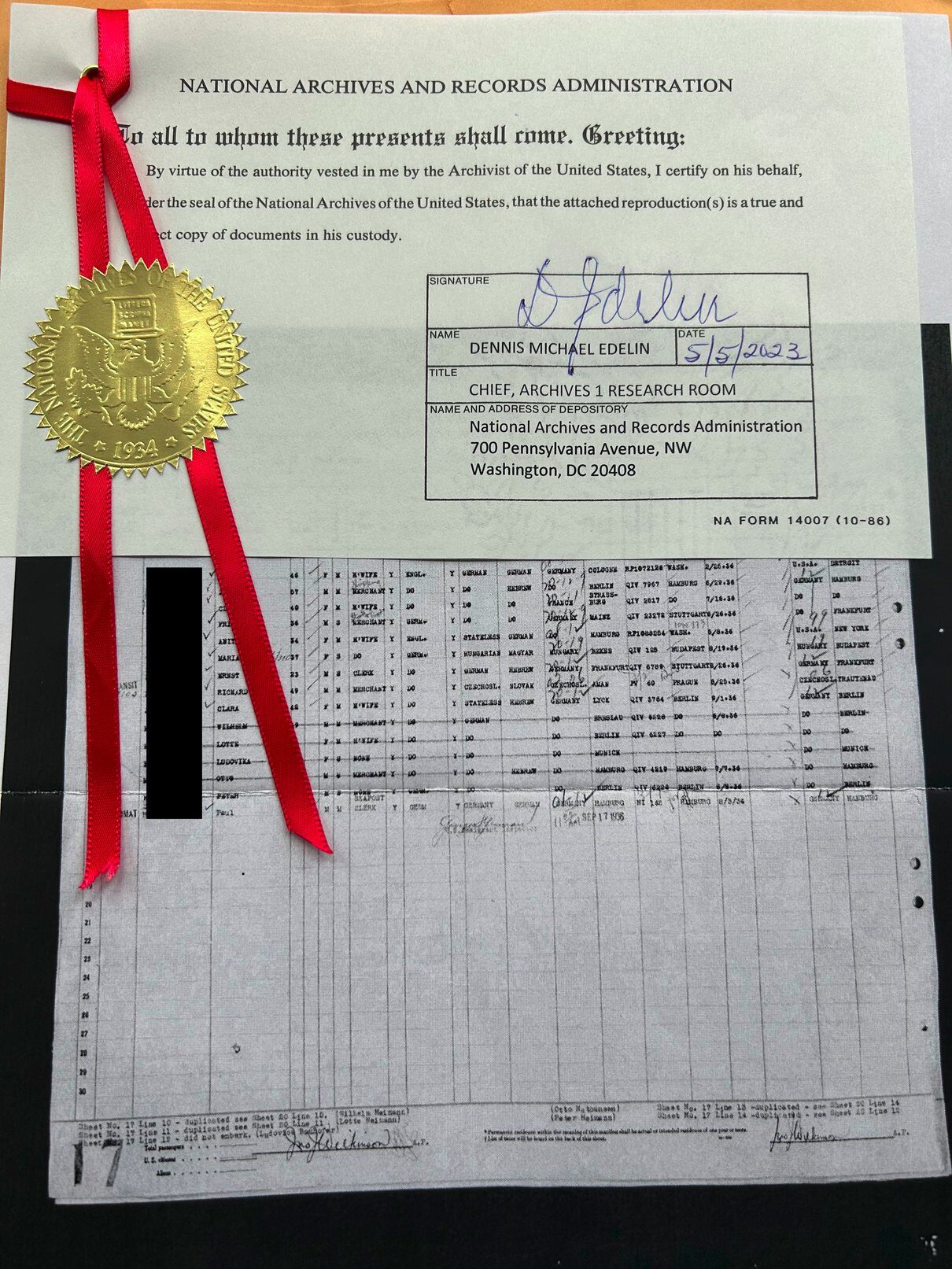
The copy certification must be on the same piece of paper as the copy (front side or back side) or on a separate piece of paper that is connected to the copy in such a way that they can not be separated without it being noticed (see example image).
What is a certified copy good for?
A certified copy solves this problem:
- You have an original document, like your passport or your ancestor's original German documents. You have to submit these documents with your German citizenship application. But you do not want to send your original documents because you want to keep them (and they will not be returned to you if you send them). The solution: You bring the original documents to an institution of authority that makes certified copies of your documents. This allows you to submit the certified copies and keep your original documents.
- Some government institution or archive holds an original record, like your ancestor's naturalization file. You need to submit this file with your German citizenship application. But the institution does not want to send you their original record. So they make a copy of the record in their collection, certify that the copy shows the original record, and send you the certified copy. This allows the institution to keep a full set of complete government records and you can submit the certified copy.
Which institution is authorized to certify copies of documents?
- Any institution that holds the original records, e.g. a government agency or an archive
- Any German mission abroad if you bring the original record
- Any institution that is authorized by your national or state law to certify copies of documents. USA: Many states do not allow notaries to certify copies of documents.
Check the website of the German embassy in your country since that website typically explains who can make certified copies: USA, Canada, UK, Australia, other countries.
Do I have to submit a certified copy?
No, you can also submit the original document instead (the BVA will not return it to you). For example: You have to submit your birth certificate. You can order a newly issued birth certificate (USA: www.vitalchek.com), the document will be sent to you by mail, you can submit that directly without any additional certification.
I only have a regular copy of a document. Where can I get it certified?
Nowhere. In order to certify the copy, an institution of authority has to confirm that the copy is a true copy of the original document. They can only do that if they have, or your bring them, the original document.
What to do instead: Request a certified copy of the document from the institution that holds the original records, e.g. the same institution that issued the original document or an archive for older records.
Which exact words does the copy certification have to use?
No exact words are required. A copy certification can use any words that convey that the copy shows the original document.
Some notaries in US states that do not allow notaries to certify copies offer the following: You make the copy, you write on the document "I certify that this is a true copy of the original document, signed by the applicant" and then the notary writes "I certify that the signature above is the authentic signature of the applicant, signed by the notary". This cannot be used to get German citizenship because the notary notarized only your signature, not the authenticity of the copy.
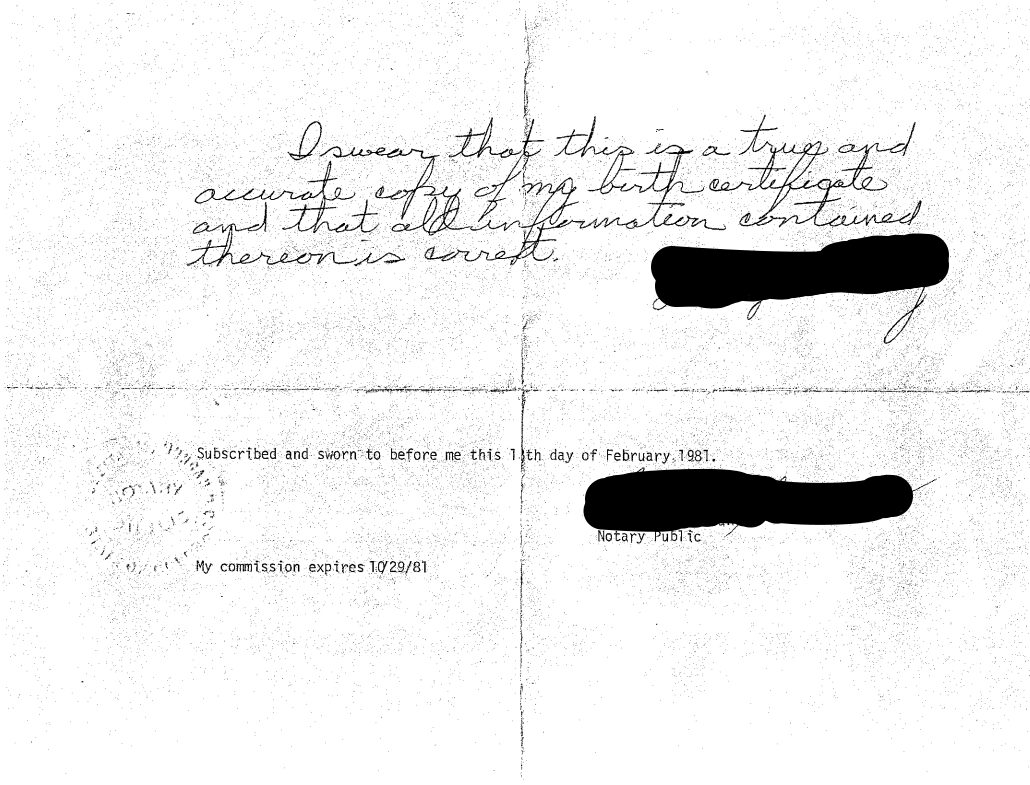
Bad notarization example.
German embassy info sheet on good vs. bad notarization: https://www.dropbox.com/scl/fi/hketwuc2qpvt4dedsl0jo/notarized-copy-guidelines.pdf?rlkey=vs449pwofzamjvjtoi8kt1sqp&e=1&st=6ygxtt9h&dl=0